
Subtracting Fractions Calculator
Subtract proper fractions, improper fractions, and mixed numbers with exact common-denominator steps, simplification, and decimal checks.
Last Updated: May 2026
Fraction subtraction
Subtract fractions with common-denominator steps
Enter proper fractions, improper fractions, or mixed numbers. The calculator converts each value to an improper fraction, finds the least common denominator, subtracts the numerators, and reduces the answer.
Examples
Leave whole blank for a proper or improper fraction.
For negative mixed numbers, put the minus sign on the whole number.
Result format
The exact fraction is calculated first; this only rounds the decimal row.
Fraction bars
Compare the starting fraction, subtracted fraction, and final difference.
Start
5/6
Subtract
1/4
Difference
7/12
Step-by-step subtraction
Follow the conversion, common denominator, subtraction, and simplification path.
Step-by-step subtraction
Follow the conversion, common denominator, subtraction, and simplification path.
Step 1
Convert mixed numbers to improper fractions
5/6 → 5/6; 1/4 → 1/4
If a whole number is present, multiply it by the denominator, add the numerator, and keep the sign with the entire mixed number.
Result: 5/6 − 1/4
Step 2
Find the least common denominator
LCM(6, 4) = 12
For addition and subtraction, both fractions must use the same denominator before their numerators can be combined.
Result: 10/12 and 3/12
Step 3
Subtract the equivalent numerators
10 − 3 = 7
Once the denominators match, subtract the numerators and keep the common denominator.
Result: 7/12
Step 4
Simplify the fraction
GCD(7, 12) = 1
Divide the numerator and denominator by their greatest common divisor to reduce the fraction fully.
Result: 7/12
Step 5
Convert the result to mixed number and decimal form
7/12 = 7/12
If the numerator is at least as large as the denominator, split it into a whole-number part and a remainder. The decimal value comes from numerator divided by denominator.
Result: Mixed: 7/12 • Decimal: 0.583333
Exact Fraction Arithmetic
This calculator treats inputs as exact fractions. The decimal value is rounded only for display and should not replace the simplified fraction in exact math work.
Checked by Jitendra Kumar
Subtracting Fractions Calculator is checked for formula labels, source links, and result limits.
Jitendra Kumar, Founder & Editorial Standards Lead. Updated May 2026. Scope: math calculators.
How to Use the Subtracting Fractions Calculator
Enter the first fraction and the fraction you want to subtract. Use the whole-number box only when a value is a mixed number.
Review the difference, the simplified fraction, the mixed-number view, the decimal approximation, and the common-denominator work.
Step 1: Enter the starting fraction
Use a numerator and denominator, or add a whole-number part for a mixed number.
Step 2: Enter the fraction to subtract
The second fraction is subtracted from the first value.
Step 3: Choose the answer format
Switch between mixed-number and improper-fraction output as needed.
Step 4: Read the common-denominator steps
Use the LCM row to see how unlike denominators were aligned before subtraction.
How This Subtracting Fractions Calculator Works
The calculator first converts mixed numbers into improper fractions. That keeps the subtraction path consistent even when classroom borrowing would otherwise be needed.
For unlike denominators, it finds the least common multiple of the two denominators, rewrites both fractions over that denominator, and subtracts the converted numerators.
The final numerator and denominator are reduced with the greatest common divisor, then shown as an improper fraction, mixed number, and decimal.
Subtracting Fractions Guide
Fraction Subtraction Rules
| Case | Example | Rule |
|---|---|---|
| Same denominator | 5/9 - 2/9 = 3/9 = 1/3 | Subtract numerators and keep the denominator. |
| Different denominators | 5/6 - 1/4 | Find the LCM, rewrite both fractions, then subtract. |
| Mixed numbers | 3 1/4 - 1 2/3 | Convert to improper fractions for reliable subtraction. |
| Negative result | 2/5 - 7/8 | The numerator subtraction can cross below zero. |
| Simplify | 14/24 = 7/12 | Use GCF after subtraction to reduce the answer. |
Worked Examples
| Problem | Answer | Note |
|---|---|---|
| 5/6 - 1/4 | 7/12 | LCM is 12. |
| 3 1/4 - 1 2/3 | 1 7/12 | Mixed numbers convert to 13/4 and 5/3. |
| 2/5 - 7/8 | -19/40 | The second fraction is larger. |
| 11/12 - 5/12 | 1/2 | Same denominator, then simplify. |
| 4 1/8 - 2 5/6 | 1 7/24 | Improper-fraction method avoids borrowing mistakes. |
Why Common Denominators Matter
Numerators can only be subtracted directly when the denominator represents the same size parts. With unlike denominators, the least common denominator rewrites both fractions into equivalent parts before the subtraction happens.
Keep the research moving with Fraction Calculator, LCM Calculator, GCF Calculator, and Decimal Calculator.
Frequently Asked Questions
Related Calculators
Fraction Calculator
Add, subtract, multiply, divide, simplify, and convert mixed numbers with exact fraction logic.
Use Fraction CalculatorLCM Calculator
Find least common multiples for common denominators and repeating-pattern problems.
Use LCM CalculatorGCF Calculator
Find greatest common factors used to reduce fractions to lowest terms.
Use GCF CalculatorDecimal Calculator
Add, subtract, multiply, divide, round, and convert decimals with exact fraction-backed arithmetic.
Use Decimal CalculatorRelated Guides
Fractions, Roots & Radicals Guide
Use this for subtracting fractions, Egyptian fractions, square roots, cube roots, nth roots, radicals, simplifying radicals, rationalizing denominators, perfect squares, and perfect cubes.
Read guide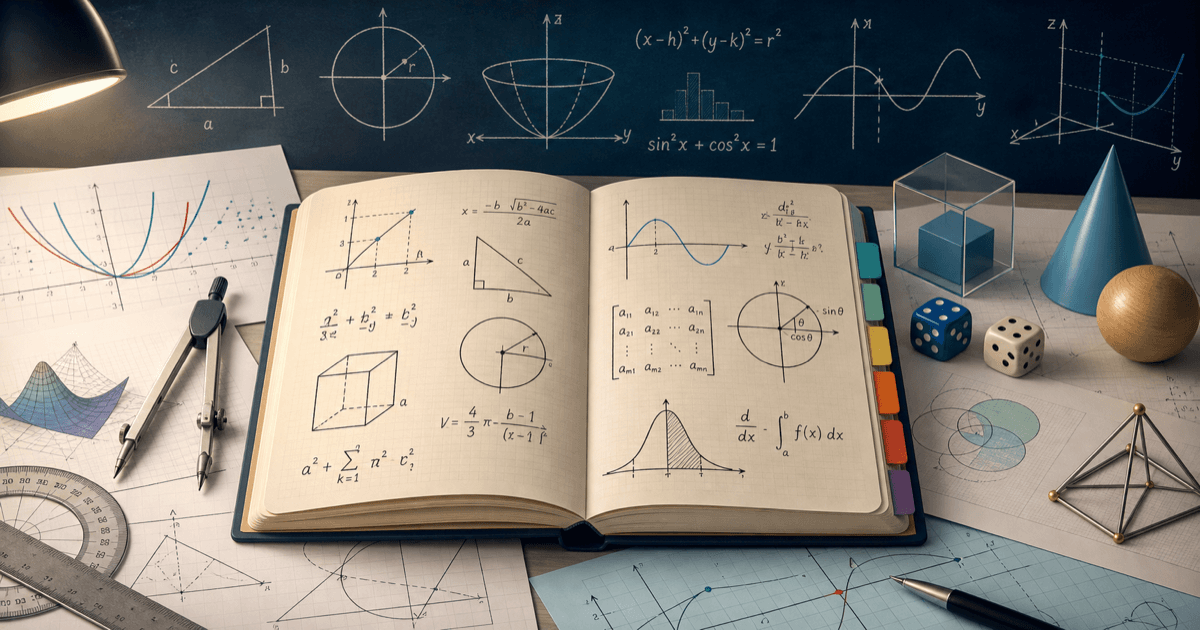
Math Formulae Page: 440 K-12 Formulas
Use this as a broad formula reference across arithmetic, algebra, geometry, trigonometry, statistics, matrices, vectors, and calculus readiness.
Read guideSources & References
- 1.OpenStax Prealgebra - Add and Subtract Fractions with Different Denominators(Accessed May 2026)
- 2.OpenStax Prealgebra - Add and Subtract Mixed Numbers(Accessed May 2026)
- 3.Khan Academy - Subtracting fractions with unlike denominators(Accessed May 2026)