
Failure to File vs Failure to Pay Penalty: IRS Difference, Rates, and Examples
A practical IRS comparison guide explaining failure-to-file vs failure-to-pay penalties, which one is larger, how both interact, extension rules, examples, payment plans, interest, relief options, official IRS video guidance, and related tools.

Guide Oversight & Review Policy
CalculatorWallah guides are written to explain calculator assumptions, source limitations, and when users should move from a rough estimate to an official rule, institution policy, or clinician conversation.
Jitendra Kumar, Founder & Editorial Standards Lead. Updated June 24, 2026. Scope: Sales tax and tax-sensitive estimate tools, Education and GPA planning calculators, Health, protein, and screening-formula pages, Platform-wide publishing standards and methodology.
On This Page
Failure to File vs Failure to Pay: Quick Answer
The IRS failure-to-file penalty is for missing the return filing deadline. The IRS failure-to-pay penalty is for not paying tax by the original payment deadline. The filing penalty is usually much larger: generally 5% per month or partial month versus 0.5% per month or partial month for the standard payment penalty.
This guide is updated as of June 24, 2026. It summarizes the current IRS public guidance for ordinary individual balance-due situations. Business returns, employment taxes, information returns, and special notices can use different penalty mechanics.
Missed Return
Failure to file
Missed Payment
Failure to pay
Best First Move
File even if you cannot pay
If you have to choose, filing is the more urgent damage-control step.
You should still pay as much as you can by the original due date. But if full payment is not possible, do not delay the return just because the payment is not ready.
Failure to File vs Failure to Pay Penalty Table
The two penalties answer different questions. Filing late is about the return. Paying late is about the money. A filing extension can solve the first problem if it is valid and the return is filed by the extended date, but it usually does not solve the payment problem.
| Question | Failure to file | Failure to pay |
|---|---|---|
| What triggers it | A required return is not filed by the original or valid extended due date. | Tax is not paid by the original payment due date. |
| Standard rate | Generally 5% of unpaid tax per month or partial month. | Generally 0.5% of unpaid tax per month or partial month. |
| Maximum | Generally capped at 25% of unpaid tax. | Generally capped at 25% of unpaid tax. |
| When both apply | Reduced by the failure-to-pay penalty for the same month, commonly leaving 4.5%. | Still commonly 0.5% for that same overlap month. |
| Extension effect | A valid extension can protect filing until the extended deadline. | A filing extension generally does not extend the time to pay. |
| Payment plan effect | A payment plan does not replace filing the return. | Can drop to 0.25% per month for eligible individuals during an approved payment plan. |
| Interest | Interest can accrue on unpaid tax and assessed penalties. | Interest can accrue separately until the balance is paid in full. |
What Happens When Both Penalties Apply
If the return is late and the tax is unpaid, both penalties can apply in the same month. The IRS says the failure-to-file penalty is reduced by the failure-to-pay penalty for that month. In a common overlap month, that means 4.5% for filing late plus 0.5% for paying late, before interest.
Common overlap month
5.0% filing rate - 0.5% payment rate = 4.5% filing penalty
4.5% filing penalty + 0.5% payment penalty = 5.0% combined monthly penalty
Once the return is filed, the failure-to-file penalty stops growing for future months. If tax remains unpaid, the failure-to-pay penalty and interest can continue.
Failure to File vs Failure to Pay Examples
These examples simplify the math so the difference is visible. They exclude IRS interest, penalty relief, notice timing, caps, missing credits, and payment processing dates. Use the IRS notice and account transcript for the exact assessment.
| Situation | Filing penalty | Payment penalty | Takeaway |
|---|---|---|---|
| $2,000 unpaid tax, return filed and paid 1 month late | $90 before interest | $10 before interest | Both apply in the same month, so the filing piece is commonly 4.5%. |
| $2,000 unpaid tax, return filed on time, paid 3 months late | $0 | $30 before interest | Filing on time avoids the larger filing penalty, but payment penalty remains. |
| $5,000 unpaid tax, no extension, return and payment 4 months late | $900 before interest | $100 before interest | The overlap months commonly total 5% per month before interest. |
| $5,000 unpaid tax, valid extension, filed by extension, paid 6 months late | $0 if the extension was valid and return was filed by the extended date | $150 before interest | The extension protects filing time, not the April payment deadline. |
| Late return with a $1,000 refund and no unpaid tax | Usually $0 because the base is unpaid tax | $0 if no tax remains unpaid | The bigger risk may be missing the refund claim deadline, not a penalty bill. |
The pattern is clear: filing late with a balance due usually becomes expensive much faster than paying late after the return was filed on time.
How Extensions Affect Each Penalty
A valid extension gives more time to file. It generally does not give more time to pay. This is the most common reason taxpayers confuse the two penalties.
Protected by Extension
Failure to file
Not Protected by Extension
Failure to pay
For individual returns, Form 4868 is often the extension tool. Paying online with the correct extension designation can also serve as an extension request, but the payment estimate still matters.
What to Do If You Cannot Pay the Tax
If you cannot pay in full, the practical IRS-safe order is usually: file the return, pay what you can, then arrange the remaining balance. Waiting to file because you cannot pay can allow the larger penalty to build.
Step 1
File or extend
Step 2
Pay something
Step 3
Set a plan
Interest Is Separate From Both Penalties
IRS interest is a separate layer. The IRS says it charges interest on unpaid tax, penalties, additions to tax, and interest until the balance is paid in full. Interest rates can change quarterly and are compounded daily.
That means a late account can have three moving pieces at once: failure-to-file penalty, failure-to-pay penalty, and interest. Removing one penalty does not automatically remove all interest unless the interest was tied to the removed amount.
For the current late-tax interest table, use our IRS Interest Rates for Late Taxes 2026 guide.
How Payment Plans Change the Failure-to-Pay Side
A payment plan does not erase the tax balance and does not stop interest. But it can lower the monthly failure-to-pay penalty for eligible individuals who filed on time and have an approved plan.
Possible Benefit
0.25% payment penalty
Still Required
Return must be filed
Penalty Relief for Filing or Paying Late
Penalty relief may be available, but it is not automatic. The main paths include administrative relief such as First Time Abate, reasonable cause, statutory exceptions, and correcting IRS account errors.
Relief requests are stronger when they identify the exact penalty, tax year, notice, deadline, and facts. A general statement that tax was hard to pay is usually not the same as reasonable cause for missing a filing deadline.
Relief checklist
- Identify whether the notice assessed failure to file, failure to pay, or both.
- Check compliance history if asking for First Time Abate.
- Attach documentation for reasonable-cause events and recovery timing.
- Correct missing payments or extension records before arguing the penalty math.
Business Return Notes
This guide focuses on the common balance-due comparison for individual and many income tax situations. Business returns can have different penalty structures.
Partnerships and S Corps
Per-owner penalties can apply
Payroll Taxes
Deposits are a separate system
For payroll-specific exposure, read the Payroll Tax Penalties Explained guide.
Action Plan After Filing or Paying Late
The right next move depends on whether the return is missing, the payment is missing, the notice is wrong, or the future withholding plan is broken.
If You Missed the Filing Deadline
- File the return as soon as possible, even if full payment is not ready.
- Include all available withholding, estimated payments, refundable credits, and extension payments.
- Keep proof of filing, e-file acceptance, certified mail records, or professional submission records.
- Ask for penalty relief if you have a clean history or a documented reasonable-cause event.
If You Cannot Pay in Full
- Pay as much as you can now through official IRS payment channels.
- Review short-term and long-term payment plan options before ignoring the balance.
- Remember that a plan can reduce collections pressure but does not stop interest.
- Set a withholding or estimated-tax adjustment so the same balance does not repeat next year.
If You Received a Notice
- Match the tax year, form, filing date, payment date, and credited payments to your records.
- Check whether the IRS used the correct extension, payment, and refund-credit history.
- Respond by the notice deadline if you dispute the calculation or need relief.
- Separate tax, penalties, and interest before deciding what to pay or challenge.
If You Are Planning Ahead
- Calendar the original payment deadline separately from the extended filing deadline.
- Estimate tax early enough to pay with Form 4868 or an online extension payment.
- Use quarterly estimated payments when withholding will not cover the year.
- Check state rules separately because state extensions and penalties can differ from IRS rules.
Calculator Tools for Penalty Planning
These calculators do not replace the IRS notice, but they make the notice easier to review. Use them to estimate the tax balance, withholding, refundable credits, self-employment tax, and future paycheck adjustment that drive penalty and interest exposure.
Balance Due
Federal Income Tax Calculator
Refund Check
Tax Refund Calculator
1099 Income
Self-Employment Tax Calculator
Withholding Fix
Paycheck Calculator
Notice Triage: Decide Which Problem You Have
A good calculator workflow starts by classifying the notice. The next step changes if the return is missing, only the payment is late, both penalties overlap, or the IRS account is missing a credit. Use this table before choosing a guide, calculator, or response letter.
| Question | Failure to file | Failure to pay |
|---|---|---|
| Return missing and tax unpaid | Was a valid extension filed by the original deadline? | File now, pay what you can, then review filing penalty, payment penalty, and relief. |
| Return filed but balance unpaid | Are payments and refundable credits posted correctly? | Reduce the balance or set up a plan before focusing on penalty relief. |
| Both penalties charged | Did the IRS apply the overlap reduction for the same month? | Compare the notice to the 4.5% plus 0.5% pattern before paying. |
| Penalty appears but refund expected | Is there actually unpaid tax after timely credits and payments? | Check refund-claim deadlines and missing payment credits before disputing the penalty. |
Official IRS Video on Penalties and Interest
A suitable official IRS video exists for this article. It explains the practical point at the center of this comparison: file by the due date or request an extension, pay as much as possible by the original due date, and remember that an extension does not extend the time to pay.
IRS: Here is How to Avoid IRS Penalties and Interest
This official IRS video is relevant because it directly explains the filing-vs-payment deadline split that causes many failure-to-file and failure-to-pay penalty surprises.
Failure to File vs Failure to Pay FAQ
Use the IRS notice for the exact assessment. Use this guide to classify the charge, decide which deadline caused it, and choose the right cleanup path.
Frequently Asked Questions
Related Calculators
Federal Income Tax Calculator
Estimate the federal income tax balance that may be subject to filing, payment, and interest charges.
Use Federal Income Tax CalculatorTax Refund Calculator
Compare withholding, credits, estimated payments, and expected balance due before filing or paying late.
Use Tax Refund CalculatorSelf-Employment Tax Calculator
Estimate Schedule SE and Schedule C pressure when 1099 or contractor income caused the balance.
Use Self-Employment Tax CalculatorPaycheck Calculator
Review future withholding after a balance-due return shows payroll withholding was too low.
Use Paycheck CalculatorCapital Gains Tax Calculator
Estimate investment tax from stock sales or crypto gains before deciding whether quarterly payments are needed.
Use Capital Gains Tax CalculatorRelated Guides
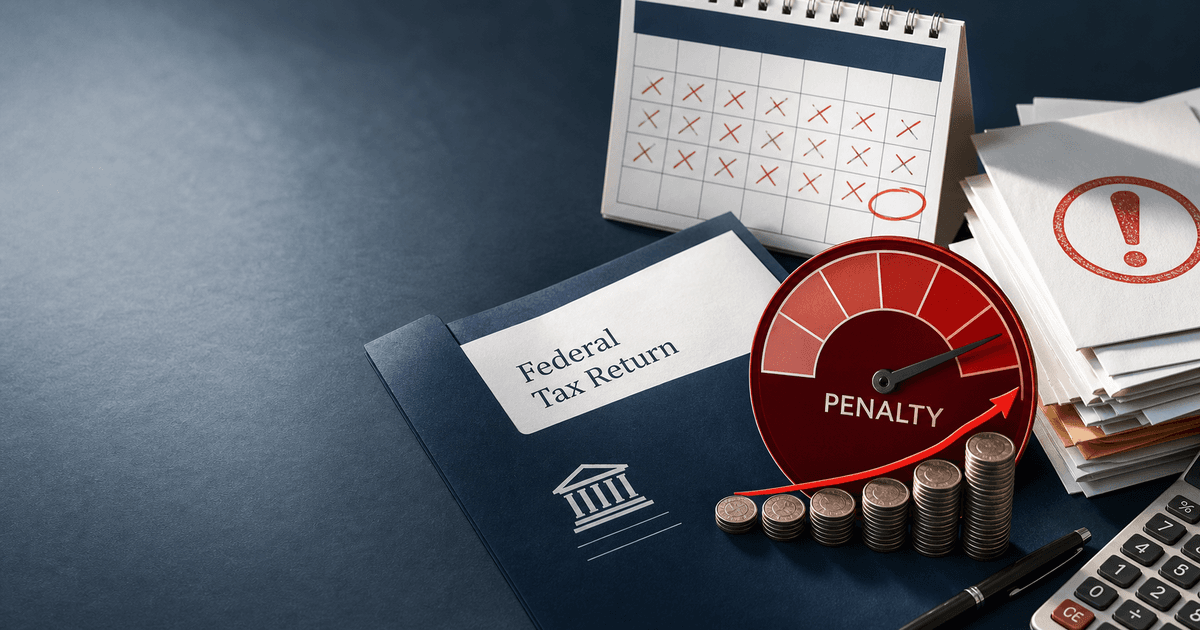
IRS Late Filing Penalty Explained
Use this for the deeper failure-to-file rules, minimum penalty, extension effect, and relief options.
Read guide
IRS Late Payment Penalty Explained
Use this for the deeper failure-to-pay rules, approved payment plan reduction, levy-notice rate, and examples.
Read guide
How IRS Penalties Are Calculated
Use this for the full IRS penalty calculation map across late filing, late payment, estimated tax, payroll deposits, and interest.
Read guide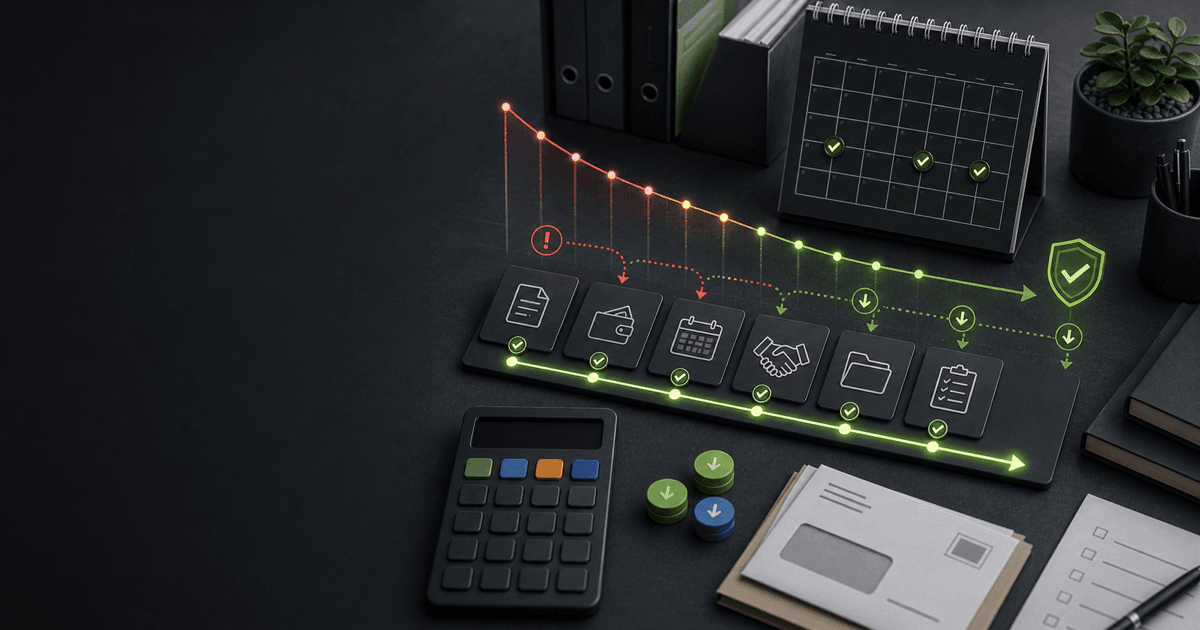
How to Reduce IRS Penalties
Use this once the penalty type is clear and the next step is abatement, reasonable cause, payment plan, or appeal.
Read guideSources & References
- 1.IRS - Failure to File Penalty(Accessed June 2026)
- 2.IRS - Failure to Pay Penalty(Accessed June 2026)
- 3.IRS - Interest(Accessed June 2026)
- 4.IRS - Penalty Relief(Accessed June 2026)
- 5.IRS - Administrative Penalty Relief(Accessed June 2026)
- 6.IRS - Penalty Relief for Reasonable Cause(Accessed June 2026)
- 7.IRS - Get an Extension To File Your Tax Return(Accessed June 2026)
- 8.IRS - Payment Plans and Installment Agreements(Accessed June 2026)
- 9.IRS - Here is How to Avoid IRS Penalties and Interest Video Script(Accessed June 2026)