
How to Reduce IRS Penalties: Relief, First Time Abate, and Payment Plans
A practical guide to reducing IRS penalties through fast filing, partial payment, payment plans, First Time Abate, reasonable cause, correction of IRS errors, appeals, documentation, official IRS video guidance, and related tools.
Guide Oversight & Review Policy
CalculatorWallah guides are written to explain calculator assumptions, source limitations, and when users should move from a rough estimate to an official rule, institution policy, or clinician conversation.
Jitendra Kumar, Founder & Editorial Standards Lead. Updated June 25, 2026. Scope: Sales tax and tax-sensitive estimate tools, Education and GPA planning calculators, Health, protein, and screening-formula pages, Platform-wide publishing standards and methodology.
On This Page
How to Reduce IRS Penalties: Quick Answer
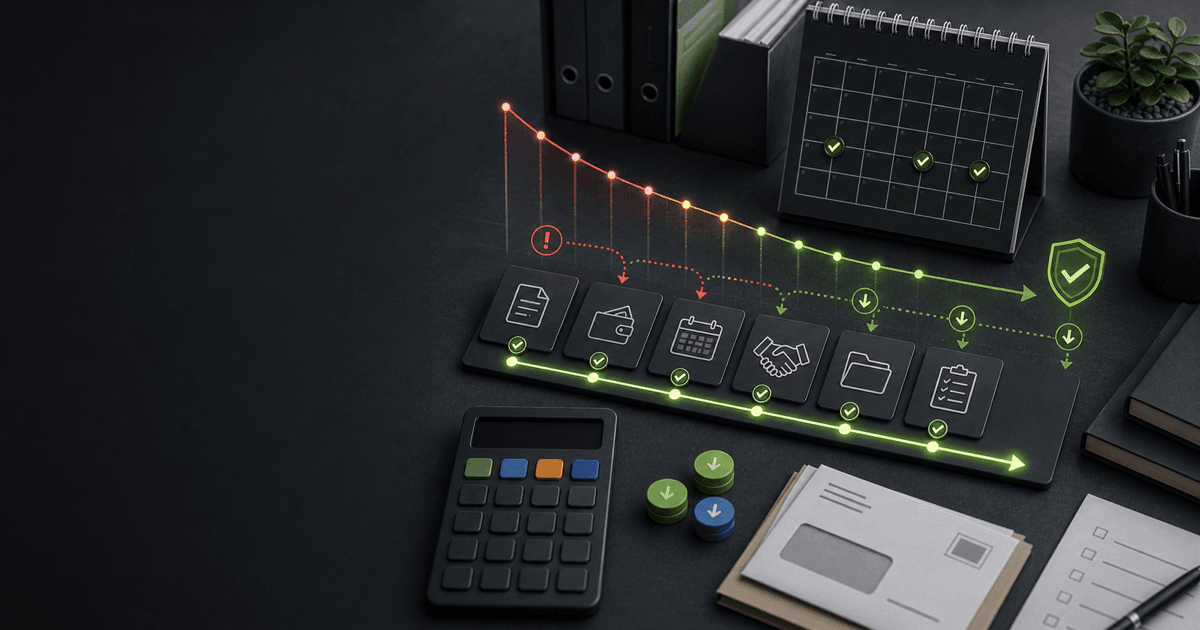
You reduce IRS penalties in two different ways. First, limit future growth by filing any missing return, paying as much as you can, and setting up a payment plan if needed. Second, ask the IRS to remove or reduce eligible penalties through relief such as First Time Abate, reasonable cause, statutory exceptions, administrative waivers, appeals, or correction of IRS account errors.
This guide is updated as of June 25, 2026. It focuses on federal IRS penalties, not separate state penalties. Interest is different from penalties and is usually harder to remove.
Stop Growth
File and pay what you can
Ask Relief
Use the right relief path
Document
Prove dates and facts
The strongest penalty request names the exact penalty and the exact relief rule.
Do not send a vague request that says the penalty is unfair. Identify the penalty, tax year, notice, dates, relief type, and documents that support the request.
Reducing IRS Penalties vs Removing Them
Reducing a penalty can mean either lowering future charges or removing a past assessment. The distinction matters because different actions solve each problem.
| Strategy | Best for | How it reduces penalties | Caution |
|---|---|---|---|
| File missing returns | Late or unfiled returns | Stops the failure-to-file penalty from growing after the return is filed and protects future compliance. | Filing does not automatically erase penalties already assessed. |
| Pay what you can now | Balances still unpaid | Reduces the unpaid-tax base for future failure-to-pay penalty and interest calculations. | Use official IRS payment channels and keep confirmation records. |
| Set up a payment plan | Taxpayers who cannot pay in full | Can reduce the failure-to-pay penalty rate for eligible individuals who filed on time. | Interest and some penalties can continue until the balance is paid. |
| Request First Time Abate | Clean recent compliance history | Can remove certain failure to file, failure to pay, or failure to deposit penalties. | It is not available for every penalty and generally requires current compliance. |
| Request reasonable-cause relief | Documented events that prevented compliance | Can remove eligible penalties when facts show ordinary business care and prudence. | Documentation, timing, and prompt correction are critical. |
| Correct IRS account errors | Wrong filing, payment, extension, or deposit posting | Can reduce or remove a penalty caused by incorrect IRS inputs. | You need proof such as e-file acceptance, payment confirmations, or mailing records. |
If you only pay the balance, you may reduce future penalty and interest growth but leave old penalties intact. If you only request relief but do not file or arrange payment, the IRS may deny administrative relief because the account is not current.
Triage Steps Before Requesting Relief
Start by auditing the notice. A penalty relief request is stronger when it begins with the correct account facts.
Step 1
Identify the penalty
Step 2
Separate tax, penalty, and interest
Step 3
Verify dates and payments
Step 4
Choose the relief path
Relief Calculator Matrix
Do the smallest useful calculation before choosing a relief request. A payment-plan case, missing-payment correction, estimated-tax waiver, and reasonable-cause package need different numbers and different proof.
| Account pattern | First calculation | Likely relief path | Proof needed |
|---|---|---|---|
| Late return with unpaid tax | Estimate failure-to-file, failure-to-pay, and daily interest separately from the unpaid tax. | File now, pay what you can, then review First Time Abate or reasonable cause. | Filing acceptance, extension status, payment confirmations, and clean-compliance history. |
| Filed on time but cannot pay | Compare 0.5% monthly failure-to-pay growth with a 0.25% plan-period scenario. | Payment plan, then penalty relief only if facts support it. | Filed return, balance due, proposed monthly payment, and confirmation the plan is active. |
| Penalty appears to ignore a payment | Recompute unpaid tax after timely withholding, estimated payments, and credits. | Account correction before abatement. | IRS Direct Pay, EFTPS, bank records, transcript, W-2/1099 withholding, or refund carryforward. |
| Estimated-tax penalty | Test prior-year safe harbor, current-year safe harbor, withholding timing, and annualized income. | Form 2210 exception, waiver, or withholding correction. | Income timing, quarterly payments, withholding dates, casualty/disaster facts, or retirement/disability facts. |
| Payroll deposit penalty | Compare required deposit amount, due date, actual EFTPS date, and deposit schedule. | Reasonable cause, administrative relief, or deposit application correction. | Payroll register, Schedule B, EFTPS history, bank/provider outage records, and control fix. |
If the notice is a late-return balance, model the penalty with the Late Filing & Late Payment Penalty Calculator before drafting the request. If the issue is cash flow, compare monthly options with the IRS Payment Plan Monthly Cost Calculator. The goal is to avoid asking for relief when the real fix is an account correction or a payment arrangement.
First Time Abate: The Clean-History Relief Path
First Time Abate is one of the most practical ways to reduce IRS penalties when the taxpayer has a clean recent compliance history. The IRS describes it as administrative relief that may apply to certain failure to file, failure to pay, and failure to deposit penalties.
The basic idea is straightforward: if you have been compliant in the recent past, have filed required returns, and have paid or arranged to pay the tax due, the IRS may remove an eligible first-time penalty. It is not a blanket waiver for all penalties, and it does not usually remove interest on the underlying tax.
First Time Abate checklist
- Confirm the penalty type is eligible.
- Confirm required returns are filed.
- Confirm tax is paid or arranged to be paid.
- Check the recent compliance history for prior penalties.
- Request abatement by phone or in writing as the notice allows.
Reasonable Cause: When Facts Prevented Compliance
Reasonable-cause relief is different from First Time Abate. It depends on facts. The IRS generally looks for ordinary business care and prudence, a direct link between the event and the missed obligation, and prompt correction after the obstacle ended.
Common reasonable-cause fact patterns can include serious illness, death in the immediate family, fire, casualty, natural disaster, inability to obtain records, or other events that made timely filing, payment, deposit, or response impossible despite reasonable efforts. The facts need to explain the whole period of noncompliance, not just one day.
Timeline
Show the dates
Proof
Attach support
Correction
Show prompt action
Lack of money by itself is usually a weak argument. If inability to pay is part of the request, explain the specific cause, the financial timeline, and the steps taken to comply anyway.
File and Pay Fast to Reduce Future Charges
Some penalty reduction is not abatement. It is damage control. If a return is late, filing now usually stops the failure-to-file penalty from growing further. If tax remains unpaid, paying any amount reduces the unpaid balance that future failure-to-pay penalty and interest can use.
Damage-control order
1. File missing returns
2. Pay what you can
3. Arrange payment for the rest
4. Request penalty relief with proof
If you need the math behind the penalty first, use How IRS Penalties Are Calculated and Failure to File vs Failure to Pay Penalty.
Payment Plans Can Reduce Failure-to-Pay Growth
A payment plan does not erase the tax. It also does not automatically erase penalties or interest. But it can reduce future failure-to-pay penalty growth in a narrow but useful way. For an eligible individual who filed on time and has an approved payment plan, the failure-to-pay penalty can drop from the standard 0.5% monthly rate to 0.25% per month or partial month during the approved plan period.
Payment plans are especially useful when full payment is not possible now but ignoring the balance would make the notice worse. A plan also supports the compliance posture needed for some administrative relief requests.
Reducing Estimated Tax Penalties
Estimated tax penalties are installment-based. They are not always reduced by the same arguments used for a late annual return. Check whether the penalty can be reduced through withholding treatment, prior-year or current-year safe harbor, annualized income, disaster relief, retirement, disability, casualty, or other waiver rules.
Individuals often review this through Form 2210. The best prevention move is to correct withholding or quarterly estimated payments before the next installment deadline. Wage withholding can be especially powerful because it is often treated as paid evenly through the year unless a different allocation is used.
Review
Check installment timing
Prevent
Fix the next quarter
Reducing Payroll and Information-Return Penalties
Business penalties need a separate playbook. Payroll failure-to-deposit penalties depend on deposit timing and notice escalation. Information-return penalties depend on form counts, correction timing, electronic filing compliance, and intentional-disregard rules.
First Time Abate may help with certain deposit penalties, but payroll cases can also involve trust-fund exposure and responsible-person issues. Information-return cases often turn on prompt correction, reasonable cause, annual caps, and proof that the business had procedures to file correctly.
Payroll
Reconcile deposits first
Information Returns
Correct quickly
Use Payroll Tax Penalties Explained if the notice involves employer deposits, Form 941, EFTPS, or trust-fund concerns.
Review the IRS Notice Before Asking for Relief
A surprising number of penalty problems are input problems. Before arguing reasonable cause, check whether the IRS used the right filing date, extension, payment, deposit, credit, or tax period.
| Relief path | Common use | What to prepare |
|---|---|---|
| First Time Abate | Certain first-time failure to file, failure to pay, and failure to deposit penalties. | Compliance history, confirmation all required returns are filed, and proof the balance is paid or arranged to be paid. |
| Reasonable cause | Events such as serious illness, death, fire, casualty, disaster, records loss, or other facts that prevented compliance. | A dated timeline, supporting documents, proof of ordinary business care, and evidence you corrected the problem promptly. |
| Statutory exception | Penalty exceptions written into the law or instructions, such as some estimated-tax or disaster-related exceptions. | The specific legal exception, forms, worksheets, tax-year facts, and proof that the exception applies. |
| Administrative waiver | IRS-announced administrative relief for eligible taxpayers, periods, disasters, or compliance programs. | Notice language, IRS announcement or waiver details, affected tax period, and eligibility proof. |
| Appeal | When the IRS denies relief or you disagree with the penalty determination. | Notice copies, prior correspondence, a focused issue statement, evidence, and deadlines from the notice. |
If the notice is wrong, ask for correction first. If the notice is right but the facts justify relief, ask for abatement. If the IRS denies relief and the notice gives appeal rights, protect the appeal deadline.
How to Request IRS Penalty Relief
The exact request path depends on the notice and penalty. Some taxpayers can request administrative relief by phone. Others should respond in writing, follow notice instructions, or use a form such as Form 843 for certain abatement or refund requests.
A focused relief request should include:
- Taxpayer name, taxpayer identification number, tax form, and tax period.
- The notice number, penalty type, and penalty amount if available.
- The relief requested: First Time Abate, reasonable cause, statutory exception, administrative waiver, correction, or appeal.
- A dated timeline and copies of supporting documents.
- A clear closing request that the IRS remove or reduce the penalty and adjust related interest on the penalty if applicable.
Keep copies of everything. If you call, write down the date, representative name or ID if provided, and what was agreed. If you mail documents, use a trackable method.
What If the IRS Denies Penalty Relief?
A denial is not always the end. If the notice or letter gives appeal rights, review the deadline immediately. Appeals are strongest when they focus on the exact penalty, the IRS reason for denial, and evidence that addresses that reason.
Deadline
Protect appeal timing
Issue
Respond to the denial reason
Scope
Keep the appeal narrow
Can IRS Interest Be Reduced Too?
Interest is separate from penalties. The IRS generally charges interest until the balance is paid in full, and interest compounds daily. Paying sooner reduces future interest. If a penalty is removed, interest that accrued on that penalty may also be adjusted.
Interest on the underlying tax usually is not removed just because a penalty is removed. Interest may be corrected when it resulted from certain IRS errors or delays, but ordinary inability to pay is usually not enough. Use IRS Interest Rates for Late Taxes 2026 to separate the interest layer from the penalty request.
Examples of Penalty Reduction Moves
These examples show how to match the action to the penalty problem. They are not promises of relief. IRS results depend on eligibility, facts, documentation, timing, and account history.
| Situation | Reduction move | Why it helps |
|---|---|---|
| You missed the filing deadline and still owe tax. | File immediately and pay what you can. | Filing stops future failure-to-file growth, and partial payment reduces future failure-to-pay and interest calculations. |
| You filed on time but cannot pay the full balance. | Pay as much as possible and request an IRS payment plan. | An approved plan can reduce the failure-to-pay rate for eligible individuals who filed on time. |
| This is your first penalty after years of clean filing and payment. | Request First Time Abate after getting current. | The IRS may remove certain penalties for taxpayers with a clean recent compliance history. |
| A serious event prevented filing or payment on time. | Request reasonable-cause relief with a dated timeline and proof. | The IRS can remove eligible penalties when facts show ordinary business care and prompt correction. |
| The IRS notice ignores a payment or extension you made on time. | Respond with proof and ask for account correction. | A penalty based on wrong IRS inputs should be corrected before debating relief. |
Documentation Checklist for IRS Penalty Relief
Good documentation makes the request easier to evaluate. The goal is to show the IRS what happened, when it happened, why it affected the tax obligation, and how quickly you fixed it.
Account Records
- IRS notice or letter, including penalty code, tax period, and response deadline.
- IRS account transcript if the posted dates or payments do not match your records.
- E-file acceptance, certified mail receipt, private delivery proof, or preparer filing confirmation.
- IRS Direct Pay, EFTPS, card payment, check image, or bank confirmation records.
Reasonable-Cause Proof
- A dated timeline from the event through correction of the tax issue.
- Medical, death, casualty, disaster, insurance, police, employer, or bank records when relevant.
- Proof that the event directly prevented timely filing, payment, deposit, or response.
- Evidence that you acted promptly after the obstacle ended.
Business Penalty Records
- Payroll registers, Forms 941, Schedule B, EFTPS confirmations, and deposit schedules.
- W-2, W-3, 1099, corrected-return, and electronic filing records for information-return cases.
- Bookkeeping notes showing how the error occurred and what control now prevents recurrence.
- State agency notices if the same event affected state withholding, unemployment, sales, or franchise tax.
Relief Request Package
- One concise explanation that names the exact penalty and tax period.
- A direct request for the relief type: First Time Abate, reasonable cause, statutory exception, administrative waiver, or correction.
- Copies of supporting records, not originals.
- A calendar reminder for the notice response or appeal deadline.
Calculator Tools That Help Reduce Future Penalties
Calculator tools do not request IRS relief, but they help fix the tax base that caused the penalty. Use them before adjusting withholding or quarterly payments.
Balance
Estimate current tax exposure
Prevention
Fix the next year
Official IRS Video About Owing Taxes
The most relevant official IRS video located for this topic is about owing tax when you cannot pay in full. It is relevant because filing, partial payment, and payment options are the first steps that reduce future penalty growth before any relief request is decided.
IRS: Owe Taxes but Can't Pay?
Official IRS guidance on filing even when full payment is not possible, paying what you can, and using IRS payment options to limit future penalty and interest growth.
Frequently Asked Questions
The FAQ section below summarizes the main ways taxpayers can reduce or request removal of IRS penalties. Match the answer to the exact penalty, notice, tax year, and account facts.
Frequently Asked Questions
Related Calculators
Federal Income Tax Calculator
Estimate the federal income tax balance that drives many late-filing and late-payment penalties.
Use Federal Income Tax CalculatorTax Refund Calculator
Compare withholding, credits, estimated payments, and expected balance due before reviewing penalty exposure.
Use Tax Refund CalculatorSelf-Employment Tax Calculator
Estimate self-employment tax when 1099 or Schedule C income caused a balance and estimated-tax penalty risk.
Use Self-Employment Tax CalculatorPaycheck Calculator
Adjust withholding after a penalty notice so the same balance-due pattern does not repeat.
Use Paycheck CalculatorCapital Gains Tax Calculator
Estimate tax from investment gains that may require withholding changes or quarterly estimated payments.
Use Capital Gains Tax CalculatorIRS Payment Plan Monthly Cost Calculator
Estimate a practical installment payment before deciding how fast the balance can be reduced.
Use IRS Payment Plan Monthly Cost CalculatorLate Filing & Late Payment Penalty Calculator
Separate failure-to-file and failure-to-pay exposure before requesting relief.
Use Late Filing & Late Payment Penalty CalculatorRelated Guides

How IRS Penalties Are Calculated
Use this first when you need to audit the penalty base, rate, cap, notice timing, and interest layer before requesting relief.
Read guide
IRS First-Time Penalty Abatement Guide
Use this for the focused First Time Abate eligibility rules, clean-history test, request steps, and denial fallbacks.
Read guide
Failure to File vs Failure to Pay Penalty
Use this when the relief request involves both late-filing and late-payment charges on the same IRS notice.
Read guide
IRS Late Filing Penalty Explained
Use this for the failure-to-file rate, minimum penalty, extension effect, and relief-specific cleanup path.
Read guideSources & References
- 1.IRS - Penalty Relief(Accessed May 2026)
- 2.IRS - Administrative Penalty Relief(Accessed May 2026)
- 3.IRS - Penalty Relief for Reasonable Cause(Accessed May 2026)
- 4.IRS - Penalty Appeal Eligibility(Accessed May 2026)
- 5.IRS - Failure to File Penalty(Accessed May 2026)
- 6.IRS - Failure to Pay Penalty(Accessed May 2026)
- 7.IRS - Interest(Accessed May 2026)
- 8.IRS - Payment Plans and Installment Agreements(Accessed May 2026)
- 9.IRS - Underpayment of Estimated Tax by Individuals Penalty(Accessed May 2026)
- 10.IRS - Form 843, Claim for Refund and Request for Abatement(Accessed May 2026)
- 11.IRS - Owe Taxes But Can't Pay? Video Script(Accessed May 2026)