
How IRS Penalties Are Calculated: Rates, Examples, Interest, and Relief
A practical guide explaining how IRS penalties are calculated across failure to file, failure to pay, estimated tax, accuracy-related, payroll deposit, and information-return penalties, with examples, interest, payment plans, relief, official IRS video guidance, and tools.

Guide Oversight & Review Policy
CalculatorWallah guides are written to explain calculator assumptions, source limitations, and when users should move from a rough estimate to an official rule, institution policy, or clinician conversation.
Jitendra Kumar, Founder & Editorial Standards Lead. Updated June 25, 2026. Scope: Sales tax and tax-sensitive estimate tools, Education and GPA planning calculators, Health, protein, and screening-formula pages, Platform-wide publishing standards and methodology.
On This Page
How IRS Penalties Are Calculated: Quick Answer
IRS penalties are not one single formula. The calculation depends on which rule was triggered. A late individual return is usually measured from unpaid tax and months late. A missed quarterly estimated payment is measured installment by installment. A payroll deposit problem uses a deposit-lateness tier. An accuracy-related penalty is usually a percentage of the underpayment tied to the accuracy issue.
The practical framework is: penalty base x rate or tier x time, then adjust for caps, overlap rules, payment-plan status, notices, relief, and separate IRS interest. This guide is updated as of June 25, 2026 and summarizes public IRS guidance for common federal penalties.
Base
What amount is penalized?
Rate
Which rate or tier applies?
Adjustments
What changes the raw math?
Do not calculate from the notice total first.
Start with the tax, return, deposit, or installment that caused the charge. Then add each penalty category and interest separately. That makes IRS notices easier to audit.
IRS Penalty Calculation Map
Use this table as the routing step before doing math. It separates penalties that look similar on a notice but are calculated differently.
| Penalty | Typical base | Basic calculation | Watch for |
|---|---|---|---|
| Failure to file | Unpaid tax required to be shown on a return | Generally 5% per month or partial month, up to 25%; reduced by the failure-to-pay penalty for months when both apply. | Minimum penalty can apply when certain returns are more than 60 days late. For Forms 1040 and 1120 due after December 31, 2025, the IRS table lists $525, limited to 100% of the underpayment if smaller. |
| Failure to pay | Unpaid tax after the original payment due date | Generally 0.5% per month or partial month, up to 25%; can be 0.25% during an approved individual payment plan if the return was filed on time. | The rate can increase to 1% per month after certain levy-notice timing if the tax is still unpaid. |
| Estimated tax underpayment | Required installment shortfall | Calculated separately for each required installment using amount, due date, days late or unpaid, and the applicable rate. | Annualized-income, withholding, safe-harbor, casualty, retirement, and waiver rules can change the result. |
| Accuracy-related | Portion of underpayment tied to the accuracy issue | Commonly 20% of the relevant underpayment for negligence, disregard, substantial understatement, or similar listed issues. | Reasonable cause, good faith, disclosure, and special valuation or transaction rules can matter. |
| Payroll failure to deposit | Required federal tax deposit not made correctly or on time | Tiered at 2%, 5%, 10%, or 15% depending on how late the deposit is and notice timing. | EFTPS timing, deposit schedule, lookback period, same-day wire rules, and trust fund exposure. |
| Information returns | Each late, missing, incorrect, or noncompliant return or payee statement | Per-return penalties depend on how late the return is corrected or filed, with higher tiers for intentional disregard. | Annual caps, small-business caps, corrected-return timing, electronic filing rules, and reasonable-cause documentation. |
The General IRS Penalty Formula
The simplest expression is useful, but it is only the starting point:
Penalty = penalty base x applicable rate x time or tier
Final assessment = penalty after caps, overlap rules, credits, notices, relief, and interest
1. Identify the penalty type
Late filing, late payment, estimated tax, deposit, information return, accuracy-related, and trust-fund cases use different rules.
2. Find the penalty base
The base may be unpaid tax, underpayment, required installment shortfall, required deposit, or number of affected returns.
3. Apply the rate or tier
Some penalties grow monthly, some are daily or installment-based, some are one-time percentages, and some are per-return dollar tiers.
4. Apply caps and interactions
Maximum percentages, minimum penalties, failure-to-file/payment overlap, notice timing, payment-plan status, and credits can change the raw number.
5. Add interest separately
Interest is not the same as a penalty. It can accrue on unpaid tax and assessed penalties until the balance is fully paid.
6. Check relief or correction
First Time Abate, reasonable cause, statutory exceptions, administrative waivers, and account corrections can reduce or remove an assessment.
The hard part is usually not multiplying percentages. It is identifying the right base, the correct dates, and whether the IRS account posted payments, extensions, deposits, and credits in the right period.
Notice-to-Calculator Workflow
A useful penalty calculator starts with the IRS notice, not with a guess at the penalty rate. Translate the notice into inputs first: tax period, form, penalty type, due dates, filing date, payment dates, unpaid tax after timely credits, and whether the IRS has already applied relief or notice-stage rate changes.
| Notice clue | Calculator input to isolate | Proof to check first | Best next tool |
|---|---|---|---|
| Failure-to-file or failure-to-pay code | Original due date, filing date, payment dates, unpaid tax, and extension status. | E-file acceptance, extension confirmation, withholding, estimated payments, and refund credits. | IRS penalty and interest calculator |
| Estimated-tax underpayment | Required installments, withholding by date, quarterly payments, annualized income, and prior-year safe harbor. | Form 2210 worksheet, payment confirmations, income timing, retirement/disaster waiver facts. | Quarterly tax payment calculator |
| Payroll deposit penalty | Deposit schedule, liability date, deposit due date, actual EFTPS date, and amount short. | Payroll register, Form 941 Schedule B, EFTPS history, bank cutoff, and payroll provider reports. | Payroll tax deposit schedule calculator |
| Accuracy-related or audit adjustment | Tax increase tied to the adjustment, penalty percentage, disclosure, and reasonable-cause facts. | Exam report, corrected return, substantiation, preparer notes, and good-faith documentation. | Federal income tax calculator |
| Interest line separate from penalty | Balance by date, quarterly IRS rate periods, payments, abatements, and notice date. | IRS transcript, quarterly rate table, payment confirmations, and penalty abatement result. | IRS penalty and interest calculator |
Use this workflow before entering numbers into the IRS Penalty & Interest Calculator. For a late return, the control formula is: unpaid tax after timely payments and refundable credits x penalty rate x months or partial months, then apply caps, overlap rules, minimum penalties, payment-plan status, and daily interest separately.
How the Failure-to-File Penalty Is Calculated
The failure-to-file penalty generally applies when a required return is not filed by the original due date or valid extended due date. For individual balance-due returns, the standard calculation is generally 5% of unpaid tax for each month or partial month the return is late, up to 25%.
If the failure-to-file and failure-to-pay penalties both apply in the same month, the IRS reduces the failure-to-file penalty by the failure-to-pay penalty for that month. That is why a common overlap month is 4.5% filing penalty plus 0.5% payment penalty, before interest.
A minimum penalty can apply when a return is more than 60 days late. For Forms 1040 and 1120 with due dates after December 31, 2025, the IRS table lists a $525 minimum penalty, limited to 100% of the underpayment if that is less.
Main variable
Unpaid tax
Control point
File even if payment is not ready
For a deeper comparison, use Failure to File vs Failure to Pay Penalty and IRS Late Filing Penalty Explained.
How the Failure-to-Pay Penalty Is Calculated
The failure-to-pay penalty generally applies when tax is not paid by the original payment due date. A filing extension can move the filing deadline, but it generally does not move the payment deadline.
The standard failure-to-pay penalty is generally 0.5% of unpaid tax for each month or partial month the tax remains unpaid, up to 25%. For an eligible individual who filed on time and has an approved IRS payment plan, the rate can be reduced to 0.25% per month or partial month during the approved plan period. After certain levy-notice timing, the rate can increase to 1% per month or partial month if the tax is still unpaid.
Basic late-payment example
$5,000 unpaid tax x 0.5% x 4 months = $100 failure-to-pay penalty
Interest is calculated separately.
Use IRS Late Payment Penalty Explained when the main issue is paying after the due date, setting up a payment plan, or checking a levy-notice rate.
How the Estimated Tax Penalty Is Calculated
The estimated tax penalty is different from a simple late-payment penalty. It looks at required installments during the year. The IRS calculates the penalty separately for each required installment, based on the amount underpaid, the installment due date, the number of days the underpayment remained unpaid, and the applicable rate.
This matters because two taxpayers can owe the same annual tax but have different estimated-tax penalties. A person who missed the April and June installments may face more exposure than someone who caught up earlier, even if the final Form 1040 balance looks similar.
Timing
Installment by installment
Relief
Safe harbors and waivers
Form
Form 2210
See the Estimated Tax Penalty Guide and IRS Estimated Tax Payment Deadlines 2026 for the quarterly-payment workflow.
How Payroll Deposit Penalties Are Calculated
Payroll deposit penalties are a separate business category. They apply when required federal tax deposits are late, not made through the required method, or made in the wrong amount. The IRS failure-to-deposit penalty is tiered based on how late the deposit is and notice timing.
1-5 Days
2%
6-15 Days
5%
More Than 15
10%
Notice Escalation
15%
Payroll penalties require deposit-date precision. Review the deposit schedule, lookback period, EFTPS confirmation, same-day wire timing, Form 941 period, and any state withholding deposits. Start with Payroll Tax Penalties Explained if the notice is tied to Form 941 or employer deposits.
How Information Return Penalties Are Calculated
Information-return penalties usually work by counting affected returns or payee statements. Examples include late, missing, incorrect, or noncompliant Forms W-2, 1099, or other information returns. The amount depends on how quickly the error is corrected or the missing return is filed.
The IRS information-return penalty table uses timing tiers such as correction within 30 days, correction after 30 days but by August 1, correction after August 1 or not filed, and intentional disregard. Dollar amounts, annual caps, small-business caps, and intentional-disregard rules are year-sensitive, so use the IRS table for the exact year.
The count can matter more than the tax amount.
A small per-return penalty can become material when hundreds of forms or payee statements are affected. Correction timing and reasonable-cause documentation are often the highest-leverage facts.
How IRS Interest Fits Into Penalty Calculations
IRS interest is not the same as a penalty. It is a separate statutory charge that can accrue on unpaid tax, penalties, additions to tax, and interest until the balance is paid in full. The IRS interest rate can change quarterly, and interest compounds daily.
This is why a penalty estimate that ignores interest will not match a live IRS account. If a notice shows tax, penalties, and interest, separate the buckets before deciding whether the penalty rate was wrong.
Penalty
Rule-based charge
Interest
Time-value charge
Use IRS Interest Rates for Late Taxes 2026 to review the current late-tax interest layer.
IRS Penalty Calculation Examples
These examples are deliberately simplified. They show the mechanics before interest, relief, notice timing, caps, payment posting, and IRS account adjustments.
| Situation | Simplified math | Result | Caveat |
|---|---|---|---|
| $2,000 unpaid tax, return filed and paid 1 month late | $2,000 x 4.5% filing overlap + $2,000 x 0.5% payment | $100 before interest | Both penalties apply in the same month, so the filing piece is commonly reduced. |
| $5,000 return filed on time, paid 4 months late | $5,000 x 0.5% x 4 months | $100 before interest | No failure-to-file penalty if the return was filed on time, but payment penalty remains. |
| $10,000 underpayment tied to a substantial understatement | $10,000 x 20% accuracy-related penalty | $2,000 before interest | Actual results can change with reasonable cause, disclosure, and category-specific rules. |
| $12,000 payroll deposit made 7 calendar days late | $12,000 x 5% failure-to-deposit tier | $600 before interest | Deposit penalties depend on how late the deposit is, method, and notice timing. |
| 20 late information returns corrected after 30 days but by August 1 | 20 returns x the applicable IRS per-return tier | Dollar amount depends on the current IRS table and caps | Information-return penalty dollar amounts and caps are year-sensitive. |
How Payment Plans Change Penalty Calculations
A payment plan does not erase the original tax debt. It also does not automatically stop interest. But for eligible individuals who filed on time, an approved payment plan can reduce the failure-to-pay penalty from the standard 0.5% monthly rate to 0.25% per month or partial month during the plan period.
That reduction is useful, but the larger move is usually to file the return, pay what you can, and avoid a new balance next year. If a payment plan covers only one tax year while the current year is underwithheld, the next penalty cycle can begin before the old one is finished.
Penalty Relief Can Change the Final Number
The raw penalty calculation is not always the final answer. IRS penalty relief may be available through administrative relief such as First Time Abate, reasonable cause, statutory exceptions, administrative waivers, or correction of an IRS error.
Relief is penalty-specific. A clean compliance history may help with certain failure to file, failure to pay, or failure to deposit penalties. Reasonable cause depends on facts and documentation. Accuracy-related penalties require a more substantive review of reasonable cause, good faith, disclosure, advice, and the underlying return position.
First Time Abate
Compliance history
Reasonable Cause
Facts and proof
Correction
Wrong inputs
Action Plan for Checking an IRS Penalty
Work from source facts to notice math. That keeps the review focused and makes it easier to decide whether to pay, request relief, amend, or dispute.
If You Are Estimating a Penalty
- Start with the IRS penalty category, not the notice total.
- Separate unpaid tax, penalties, and interest before doing math.
- Use actual filing, payment, deposit, and notice dates instead of round-month guesses.
- Check whether credits, withholding, estimated payments, and extension payments were posted correctly.
If You Just Missed a Deadline
- File the required return as soon as possible if it has not been filed.
- Pay as much as you can through an official IRS payment channel.
- Set up a payment plan only after confirming the balance and current filing compliance.
- Fix withholding or estimated payments so the same underpayment does not repeat.
If You Received a Notice
- Match the notice tax period, form, dates, payments, and penalty codes to your records.
- Look for overlap rules, posted-payment timing, and incorrect missing-return assumptions.
- Respond by the notice deadline if you dispute the calculation or request relief.
- Keep a concise reasonable-cause timeline and supporting documents if facts justify relief.
If You Are a Business
- Treat payroll deposits, information returns, and sales or state tax separately from income-tax penalties.
- Reconcile EFTPS deposits, payroll registers, Forms 941, W-2/W-3, and state withholding accounts.
- Prioritize trust-fund and deposit issues because the exposure can move faster than income-tax balances.
- Use a tax professional when notice timing, intentional disregard, or responsible-person exposure appears.
Calculator Tools That Help Before Penalty Math
Calculator outputs are not IRS penalty assessments, but they help estimate the tax base that feeds the calculation. Start there before reviewing penalty percentages.
Income Tax
Estimate the balance
Planning
Prevent the next penalty
Official IRS Video About Penalties and Interest
The IRS has an official video explaining the basic prevention steps: file by the deadline, request an extension if needed, pay as much as possible by the original due date, and remember that an extension to file is not an extension to pay. It is relevant because those timing facts drive the most common failure-to-file and failure-to-pay calculations.
IRS: Here is How to Avoid IRS Penalties and Interest
Official IRS guidance on avoiding penalties and interest by filing on time, using extensions correctly, and paying as much as possible by the original due date.
Frequently Asked Questions
The FAQ section below summarizes the calculation rules for common IRS penalty categories. Always match the rule to the exact form, tax period, notice, and account transcript.
Frequently Asked Questions
Related Calculators
Federal Income Tax Calculator
Estimate the federal income tax balance that becomes the base for many individual IRS penalties.
Use Federal Income Tax CalculatorTax Refund Calculator
Compare withholding, credits, estimated payments, and expected balance due before penalty math starts.
Use Tax Refund CalculatorSelf-Employment Tax Calculator
Estimate Schedule SE and contractor-income tax exposure before quarterly payment penalties repeat.
Use Self-Employment Tax CalculatorPaycheck Calculator
Review future withholding after a balance-due return shows underwithholding or missed estimated payments.
Use Paycheck CalculatorCapital Gains Tax Calculator
Estimate investment tax from stock, crypto, or asset sales before quarterly estimated-tax planning.
Use Capital Gains Tax CalculatorIRS Penalty & Interest Calculator
Model failure-to-file, failure-to-pay, and interest exposure after identifying the penalty base.
Use IRS Penalty & Interest CalculatorRelated Guides
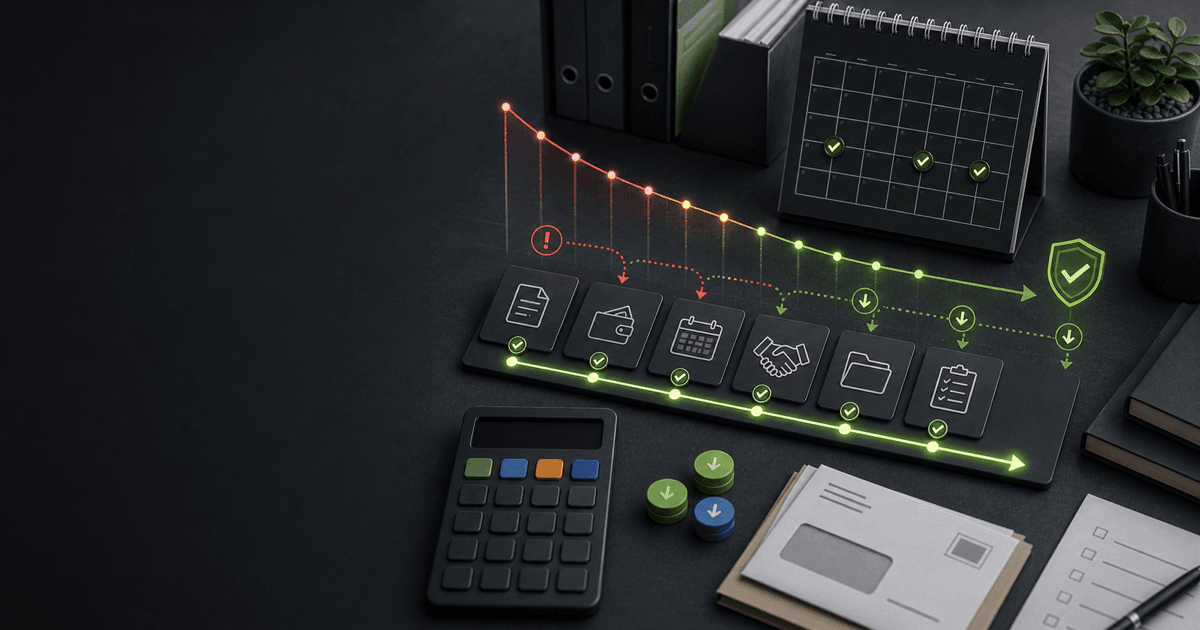
How to Reduce IRS Penalties
Use this after checking the calculation to choose between First Time Abate, reasonable cause, payment plans, correction, or appeal.
Read guide
IRS First-Time Penalty Abatement Guide
Use this when the calculation is correct and the next step is checking First Time Abate eligibility for an eligible penalty.
Read guide
Failure to File vs Failure to Pay Penalty
Use this when the calculation involves both late-filing and late-payment charges on the same IRS account.
Read guide
IRS Late Filing Penalty Explained
Use this for the deeper failure-to-file rate, minimum penalty, extension effect, examples, and relief options.
Read guideSources & References
- 1.IRS - Penalties(Accessed May 2026)
- 2.IRS - Failure to File Penalty(Accessed May 2026)
- 3.IRS - Failure to Pay Penalty(Accessed May 2026)
- 4.IRS - Underpayment of Estimated Tax by Individuals Penalty(Accessed May 2026)
- 5.IRS - Accuracy-Related Penalty(Accessed May 2026)
- 6.IRS - Failure to Deposit Penalty(Accessed May 2026)
- 7.IRS - Information Return Penalties(Accessed May 2026)
- 8.IRS - Interest(Accessed May 2026)
- 9.IRS - Penalty Relief(Accessed May 2026)
- 10.IRS - Payment Plans and Installment Agreements(Accessed May 2026)
- 11.IRS - Here is How to Avoid IRS Penalties and Interest Video Script(Accessed May 2026)