
Horsepower Calculator
Calculate horsepower from torque and RPM, quarter-mile elapsed time, trap speed, force and speed, kilowatts, wheel horsepower, drivetrain loss, fuel flow, and power-to-weight.
Last Updated: July 2026
Torque and RPM power
Use this when you have torque at a known RPM from an engine dyno, chassis dyno, or published torque curve.
Quarter-mile horsepower checks
Enter vehicle weight with driver, elapsed time, and trap speed. ET is traction-sensitive; trap speed is usually less launch-sensitive.
Force, speed, kW, and fuel context
Add linear pulling force, electric power, BSFC, and fuel price when you want more than the torque/RPM formula.
Torque/RPM horsepower
351.5 hp
Wheel horsepower equivalent
298.8 whp
Quarter-mile average
317.1 hp
Crank from measured WHP
347.1 hp
Electric kW to hp
0 hp
Fuel at reference power
$106.81/hr
Estimate spread
Aligned estimate: ET/trap spread is 2.1%.
Power to weight
10.38 lb per hp, or 96.3 hp per 1,000 lb.
Fuel flow
175.7 lb/hr, about 28.48 gal/hr.
Torque, Wheel, and Weight Trace
| Metric | Result | Calculation |
|---|---|---|
| Torque/RPM horsepower | 351.5 hp | 355 lb-ft x 5,200 RPM / 5,252 |
| Wheel horsepower equivalent | 298.8 whp | 351.5 hp x (1 - 15%) |
| Crank horsepower from measured wheel hp | 347.1 hp | 295 whp / (1 - drivetrain loss) |
| Power-to-weight | 96.3 hp / 1,000 lb | 10.38 lb per hp |
Quarter-mile Cross-check
| Estimate | Horsepower | Formula |
|---|---|---|
| ET horsepower estimate | 313.7 hp | 3,650 lb / (13.2 / 5.825)^3 |
| Trap-speed horsepower estimate | 320.4 hp | 3,650 lb x (104 / 234)^3 |
| Average quarter-mile estimate | 317 hp | Average of ET and trap-speed estimates when both are available |
| ET vs trap spread | 2.1% | Aligned estimate. Wide spread often points to traction, shift, rollout, or weight assumptions. |
Unit and Linear Power Conversions
| Conversion | Result | Method |
|---|---|---|
| Mechanical horsepower | 351.49 hp | Reference result from torque and RPM |
| Kilowatts | 262.1 kW | 1 mechanical hp = 0.745699872 kW |
| Metric horsepower | 356.36 PS | 1 mechanical hp = about 1.01387 PS |
| Input kW to mechanical hp | 0 hp | 0 kW / 0.745699872 |
| Force and speed horsepower | 0 hp | Enter force and speed for linear power |
Fuel-flow Context
| Metric | Result | Assumption |
|---|---|---|
| Reference horsepower | 351.5 hp | Uses torque/RPM first, then quarter-mile average, then kW or force/speed if torque is unavailable |
| Fuel mass flow | 175.7 lb/hr | 351.5 hp x 0.5 lb/hp/hr |
| Gasoline volume estimate | 28.48 gal/hr | Assumes 6.17 lb/gal gasoline density |
| Fuel cost at reference power | $106.81 | 28.48 gal/hr x $3.75/gal |
Performance Calculation Notice
This calculator is an educational estimator, not dyno certification, tuning advice, emissions guidance, warranty guidance, race classification, or safety approval. Use calibrated testing, vehicle-specific data, legal compliance checks, and qualified professionals before modifying or racing a vehicle.
Checked by Jitendra Kumar
Horsepower Calculator is checked for formula labels, source links, and result limits.
Jitendra Kumar, Founder & Editorial Standards Lead. Updated July 2026. Scope: automotive calculators.
How to Use the Horsepower Calculator
Quick answer
Horsepower from torque is calculated as torque in pound-feet multiplied by RPM, divided by 5,252. For drag-strip estimates, horsepower can also be approximated from vehicle weight plus quarter-mile elapsed time or trap speed. This calculator combines those methods and adds wheel/crank correction, kW conversion, fuel-flow context, and power-to-weight.
Use the torque/RPM section when you know torque at a specific RPM. Use the quarter-mile section when you have race weight with driver, elapsed time, and trap speed. Use drivetrain loss when comparing crank horsepower to chassis-dyno wheel horsepower.
Enter force and speed for linear propulsive-power checks, or kW for electric motor and spec-sheet conversion. BSFC and fuel price are optional planning context for fuel flow at the selected reference horsepower.
For forced-induction planning, use this calculator first for baseline horsepower, then move to the Boost Horsepower Calculator for boost pressure, charge-air temperature, pressure ratio, and injector checks.
Step 1: Choose your evidence
Use torque/RPM for dyno or spec-sheet data, quarter-mile ET/trap speed for drag-strip estimates, kW for motor conversion, or force/speed for propulsive power.
Step 2: Use the correct weight and unit basis
Quarter-mile formulas need race weight with driver. Torque can be entered in lb-ft or N-m, and the calculator converts internally.
Step 3: Separate crank hp from wheel hp
Enter drivetrain loss and measured wheel horsepower when you need a rough crank estimate or wheel-equivalent result.
Step 4: Check the spread and warnings
A large ET/trap spread or mismatch against torque/RPM horsepower usually means one assumption needs review.
Horsepower Formulas and Methodology
Horsepower is a rate of doing work. In automotive use, it is commonly derived from rotating torque and engine speed, but people also estimate it from track performance, motor kW, pulling force, or chassis-dyno wheel horsepower. The calculator keeps these methods separate so the assumptions stay visible.
| Method | Formula | When it is useful |
|---|---|---|
| Torque and RPM horsepower | hp = torque lb-ft x RPM / 5,252 | Use when you know torque at a specific RPM. Peak torque and peak horsepower usually occur at different RPMs. |
| Quarter-mile elapsed-time estimate | hp = weight / (ET / 5.825)^3 | Useful as a rough drag-strip check, but launch, traction, rollout, shifts, and weather affect ET heavily. |
| Quarter-mile trap-speed estimate | hp = weight x (trap speed / 234)^3 | Trap speed is usually less launch-sensitive than ET, but aero drag, gearing, and air density still matter. |
| Wheel horsepower from crank horsepower | whp = crank hp x (1 - drivetrain loss) | Lets you compare engine-dyno and chassis-dyno style results without mixing bases. |
| Crank horsepower from wheel horsepower | crank hp = whp / (1 - drivetrain loss) | Useful when a chassis dyno result needs a rough crank-power estimate. |
| Linear force and speed horsepower | hp = force lb x speed ft/min / 33,000 | Useful for pulling force, grade-load, and propulsive-power sanity checks. |
| Kilowatt conversion | hp = kW / 0.745699872 | Uses mechanical horsepower, not metric PS. |
| Fuel flow estimate | fuel lb/hr = hp x BSFC | A planning estimate only. Real fuel use depends on engine efficiency, AFR/lambda, duty cycle, and calibration. |
Worked example
If an engine makes 355 lb-ft at 5,200 RPM, horsepower is 355 x 5,200 / 5,252 = about 351 hp. With 15% drivetrain loss, the wheel-equivalent estimate is about 298 whp. If the same vehicle weighs 3,650 lb and runs 13.2 seconds at 104 mph, the ET and trap-speed formulas provide a separate track-based cross-check.
| Example | Inputs | What the result tells you |
|---|---|---|
| Street engine dyno | 355 lb-ft at 5,200 RPM | Horsepower is about 351 hp before drivetrain loss. The same car may show about 298 whp with 15% drivetrain loss. |
| Quarter-mile cross-check | 3,200 lb car, 11.5 sec ET, 121 mph trap | ET and trap speed should be compared. A wide spread can point to traction, gearing, shift time, or weight errors. |
| Metric torque pull | 520 N-m at 4,400 RPM | The calculator converts N-m to lb-ft first, then applies the same horsepower formula. |
| EV or motor kW | 220 kW motor output | 220 kW is about 295 mechanical horsepower. That does not automatically predict acceleration without vehicle weight and traction. |
| Tow-grade load | 1,800 lb of drawbar force at 55 mph | Force-speed horsepower shows propulsive power demand separately from engine peak power. |
Educational video: horsepower, RPM, and torque
This video is from Wisc-Online, part of WisTech Open. It is relevant because the calculator's primary formula depends on the relationship between torque, engine speed, and horsepower.
How to Interpret Horsepower Estimates
What was missing from basic horsepower calculators
A basic horsepower calculator usually asks for vehicle weight and quarter-mile time or trap speed. That is useful for a quick drag-strip answer, but it leaves out the most common real-world follow-up questions: torque at RPM, wheel horsepower versus crank horsepower, kW conversion, power-to-weight, and whether ET and trap speed agree.
| Tool type | Inputs | What you get |
|---|---|---|
| Basic competitor-style horsepower calculator | Vehicle weight plus quarter-mile elapsed time or trap speed | Good for a quick drag-strip estimate, but it does not explain torque/RPM power, WHP vs crank HP, kW conversion, fuel flow, or why ET/trap estimates disagree. |
| This Horsepower Calculator | Torque, torque unit, RPM, race weight, ET, trap speed, drivetrain loss, measured WHP, force, speed, kW, BSFC, and fuel price | Calculates torque/RPM hp, quarter-mile ET hp, trap-speed hp, average spread, wheel/crank correction, force-speed hp, kW conversion, fuel flow, and power-to-weight. |
| Dyno or track validation | Calibrated dyno, weather correction, vehicle scale weight, datalogging, and repeated runs | Required when the number is used for tuning, competition, emissions, warranty, or safety decisions. |
ET horsepower vs trap-speed horsepower
ET-based formulas punish a bad launch, tire spin, missed shift, soft first gear, or conservative rollout. Trap-speed formulas are usually a cleaner power signal once the vehicle is moving, but they still depend on aero drag, gearing, weather correction, and measurement accuracy. A large spread is not a failure; it is a diagnostic clue.
Crank, wheel, corrected, and advertised horsepower
Do not compare horsepower numbers unless the basis is clear. Engine-dyno crank hp, chassis-dyno wheel hp, advertised certified hp, corrected dyno hp, and uncorrected dyno hp can all be different. Drivetrain-loss correction is only an estimate, but it is better than mixing wheel and crank numbers in one comparison.
| Mistake | Better approach |
|---|---|
| Using peak torque at the wrong RPM | The torque/RPM formula needs torque at that RPM. Peak torque at 3,000 RPM cannot be paired with 6,000 RPM unless the engine really makes that torque there. |
| Comparing crank hp to wheel hp | A 350 hp crank estimate and a 300 whp dyno result may describe the same vehicle after drivetrain loss. |
| Treating quarter-mile ET as pure horsepower | ET includes launch quality, traction, shifts, gearing, reaction-independent rollout, weather, and driver consistency. |
| Ignoring vehicle weight with driver | Quarter-mile formulas need race weight as tested, not curb weight from a brochure. |
| Assuming kW and PS are the same as mechanical hp | They are close but not identical. Use explicit unit conversion when comparing spec sheets. |
| Using fuel-flow rows as tuning advice | BSFC fuel flow is a sizing estimate, not an AFR, injector pulsewidth, or ECU calibration instruction. |
Related performance workflows
Use the 0-60 Calculator for acceleration estimates, the BSFC Calculator for deeper fuel-efficiency and engine duty-cycle math, and the Fuel Cost / Gas Mileage Calculator when you need trip or annual fuel spending instead of peak-power fuel flow.
Editorial and calculation note
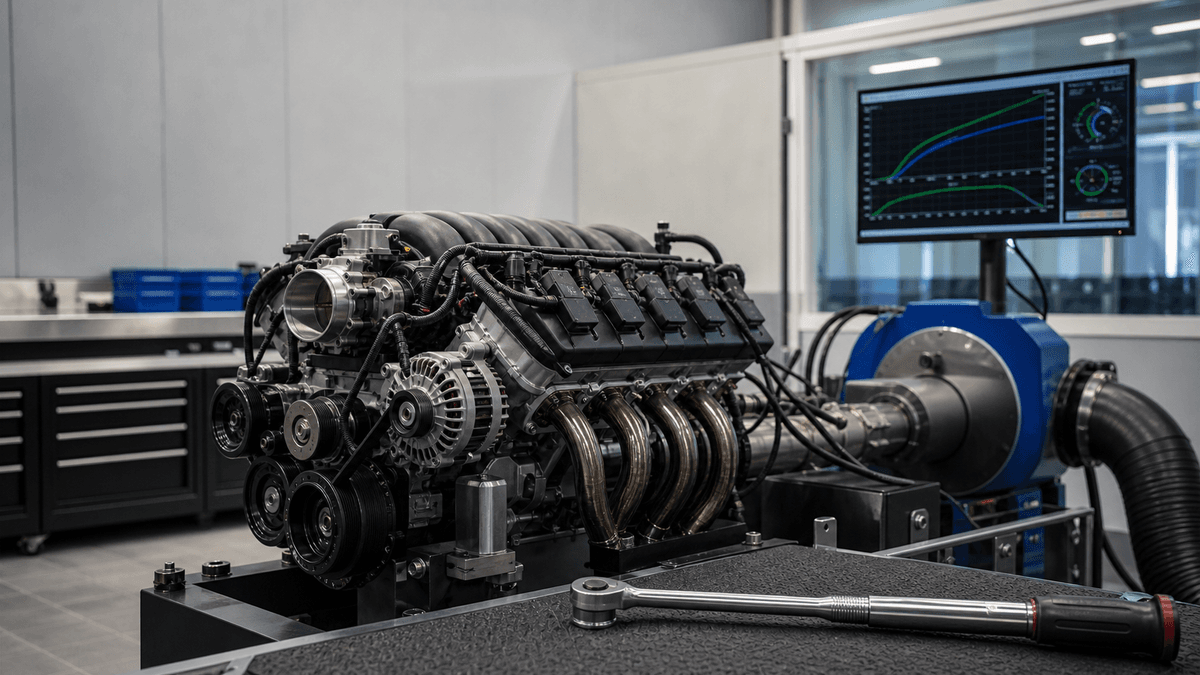
CalculatorWallah built this page to turn the common horsepower formulas into a more practical diagnostic tool. The formulas are shown, the assumptions are editable, the page includes source references and schema, and the feature image is a custom project asset rather than a generic placeholder.
Keep the research moving with Boost Horsepower Calculator, 0-60 Calculator, BSFC Calculator, and Fuel Cost / Gas Mileage Calculator.
Frequently Asked Questions
Related Calculators
Boost Horsepower Calculator
Estimate turbo or supercharger horsepower with boost, altitude, heat, fuel, and drivetrain assumptions.
Use Boost Horsepower Calculator0-60 Calculator
Estimate acceleration from power, weight, traction, drivetrain, and timing assumptions.
Use 0-60 CalculatorBSFC Calculator
Calculate brake specific fuel consumption, fuel flow, efficiency, cost, and CO2.
Use BSFC CalculatorFuel Cost / Gas Mileage Calculator
Estimate trip fuel cost, gallons needed, cost per mile, and tank range.
Use Fuel Cost / Gas Mileage CalculatorSources & References
- 1.Omni Calculator - Horsepower Calculator(Accessed July 1, 2026)
- 2.NIST - SI Units(Accessed July 1, 2026)
- 3.OpenStax College Physics 2e - Power(Accessed July 1, 2026)
- 4.NASA Glenn Research Center - Specific Fuel Consumption(Accessed July 1, 2026)
- 5.Wisc-Online - Calculating Horsepower, RPM & Torque(Accessed July 1, 2026)