
Form 1065 Deadline 2026: Partnership Due Date, K-1 Timing, Extension, and Filing Checklist
A detailed 2026 Form 1065 deadline guide for partnerships and LLCs taxed as partnerships, including the March 16 original due date, September 15 extension date, Schedule K-1 timing, Form 7004, e-file rules, partner payment dates, late-filing penalties, state issues, official IRS video, and a practical filing checklist.
Guide Oversight & Review Policy
CalculatorWallah guides are written to explain calculator assumptions, source limitations, and when users should move from a rough estimate to an official rule, institution policy, or clinician conversation.
Jitendra Kumar, Founder & Editorial Standards Lead. Updated June 25, 2026. Scope: Sales tax and tax-sensitive estimate tools, Education and GPA planning calculators, Health, protein, and screening-formula pages, Platform-wide publishing standards and methodology.
On This Page
Form 1065 Deadline 2026
The main Form 1065 deadline in 2026 was March 16, 2026 for calendar-year partnerships filing a 2025 U.S. Return of Partnership Income. The usual calendar-year date is March 15, but March 15, 2026 fell on a Sunday, so IRS instructions allowed calendar-year 2025 partnership returns to be filed by Monday, March 16, 2026.
This article is updated as of June 25, 2026. The original March 16 filing date and the June 15 partner estimated-tax installment have passed. If the partnership filed a timely and valid Form 7004, the next major federal filing date is generally September 15, 2026. Partner payment deadlines are separate, so a partnership extension does not automatically protect partner Form 1040, trust, corporation, or state returns.
Countdown Timer
The tracked 2026 IRS deadline sequence is complete.
Original Deadline
March 16, 2026
Calendar-year partnerships had to file Form 1065 and provide K-1 packages, or file Form 7004 by this date.
Extended Filing
September 15 needs Form 7004
The September filing date generally applies only when Form 7004 was filed by the original deadline and the extension was valid.
Partner Alert
K-1s affect other returns
Partners often need K-1 data for Form 1040, estimated tax, basis, QBI, self-employment tax, passive losses, and state returns.
Quick Actions for a Form 1065 File
Use this page to organize the deadline and filing package. Use IRS systems, tax software, professional review, state portals, and partner-level planning before filing, extending, correcting, or responding to notices.
Key Form 1065 Dates in 2026
Form 1065 is an information return, but the calendar still matters. A late partnership return can create partner-count penalties, late K-1 problems, amended partner returns, state notices, and estimated-tax misses for partners who depend on pass-through data.
2026 Form 1065 Deadline Table
| Date | Deadline | Applies To | Action |
|---|---|---|---|
| February 2, 2026 | Payroll and 1099 operating close | Partnerships with employees, vendors, contractors, rent, interest, or legal payments | Reconcile W-2, W-3, 1099, payroll tax, guaranteed-payment support, and vendor records before Form 1065 work is finalized. |
| March 16, 2026 | Original Form 1065 deadline | Calendar-year partnerships reporting 2025 tax year activity | File Form 1065 and furnish partner Schedule K-1 packages, or file Form 7004 if more filing time is needed. |
| March 16, 2026 | Form 7004 extension request deadline | Calendar-year partnerships needing an automatic filing extension | Submit Form 7004 by the regular due date and keep e-file or mailing proof with the permanent partnership tax file. |
| April 15, 2026 | Partner Form 1040 and first estimated-tax date | Individual partners with K-1 income, guaranteed payments, self-employment tax, or balance-due risk | Partner-level tax is separate from the partnership return. File or extend the partner return and pay any individual balance due. |
| June 15, 2026 | Second partner estimated-tax installment | Partners who need quarterly payments for 2026 income | Update K-1 projections, guaranteed payments, wages, withholding, and state estimates before the midyear payment. |
| September 15, 2026 | Extended Form 1065 and K-1 deadline | Calendar-year partnerships with a timely and valid Form 7004 extension | File the partnership return and deliver final K-1, K-2, and K-3 information needed for partner returns. |
| September 15, 2026 | Third partner estimated-tax installment | Partners making individual or entity-level estimated-tax payments | Recalculate partner tax after the extended K-1 package is available, especially for self-employment tax and state payments. |
| October 15, 2026 | Common extended partner Form 1040 date | Individual partners who validly extended their personal returns | Partner returns often depend on final K-1 data. The partner extension is separate from the partnership extension. |
| January 15, 2027 | Fourth individual estimated-tax installment for 2026 income | Individual partners with ongoing K-1, guaranteed payment, or self-employment income | Use final 2026 projections and prior safe-harbor analysis before the last individual estimated-tax payment. |
Fiscal-year partnerships, short-year partnerships, foreign partnerships, books-and-records outside the United States and Puerto Rico, state legal holidays, disaster relief, and state pass-through entity tax rules can change the action date. Confirm those facts before relying on the calendar-year answer.
Who Files Form 1065
Form 1065 reports a partnership's income, deductions, gains, losses, credits, and partner allocations. It is usually a pass-through return: the partnership reports the information, and partners use Schedule K-1 to report their shares on their own returns.
Domestic Partnerships
Most partnerships file Form 1065
IRS instructions generally require every domestic partnership to file Form 1065 unless it neither receives income nor incurs deductible or creditable expenditures.
LLCs
LLCs can be partnership filers
LLCs classified as partnerships for federal income tax purposes generally have the same filing requirements as domestic partnerships.
Foreign Partnerships
U.S. source or effectively connected income
Foreign partnerships may need Form 1065 when they have effectively connected income, U.S. source income, U.S. partners, or special filing requirements.
Not Corporate Forms
Do not mix Form 1065 with Form 1120
S corporations use Form 1120-S, C corporations use Form 1120, and disregarded entities may report activity directly on an owner return.
Schedule K-1 Deadline and Partner Package
Schedule K-1 is the practical reason the Form 1065 deadline matters to partners. It reports each partner's share of income, loss, deductions, credits, guaranteed payments, self-employment information, capital changes, and many separately stated items. In complex partnerships, Schedules K-2 and K-3 can also be part of the partner package.
Calendar-Year Package
March 16 was the original target
For a 2025 calendar-year partnership, Form 1065 and partner K-1 packages were generally due March 16, 2026 before extension.
Extended Package
September 15 if validly extended
A timely Form 7004 generally gives the partnership until September 15, 2026 to finish Form 1065 and provide final partner information.
Partner Returns
K-1 data flows downstream
Partners may need K-1 information for Form 1040, Form 1041, Form 1120, Form 990-T, estimated tax, state returns, and amended returns.
Correction Risk
Corrected K-1s are costly
Late changes to allocations, capital, basis, foreign items, or state sourcing can force amended partner returns and partner notice cleanup.
Partner Package Control for K-1, K-2, K-3, and Estimates
A partnership deadline page becomes useful when it tells the preparer what partners can actually use. The control formula is:
Partner package completeness = final K-1 + required statements + K-2/K-3 decision + state detail + partner payment reminders
If the partnership is extended to September 15, partners may still need estimates, Form 1040 extensions, trust or corporate filing plans, and state payment decisions before the final package is available.
Partner Package
Final K-1 and statements
Example: Ordinary income, guaranteed payments, separately stated deductions, credits, and QBI detail.
Tool use: Use the document checklist builder to make every partner receive the same core package plus partner-specific statements.
Downstream risk: Missing statements can force partner estimates, late filings, or amended returns after October 15.
Partner Package
Self-employment and basis detail
Example: General partner guaranteed payments, LLC member SE tax items, liabilities, capital, and at-risk support.
Tool use: Use self-employment and federal income tax calculators as partner-level planning checks after K-1 projections are ready.
Downstream risk: Partners can underpay estimates or misread passive loss, basis, and self-employment tax limits.
Partner Package
State and nonresident data
Example: State source income, composite return participation, PTE tax credits, and nonresident withholding.
Tool use: Use the tax deadline calendar to coordinate state filings with September 15 and October 15 federal dates.
Downstream risk: A federal K-1 can be complete while state partner returns remain exposed.
Partner Package
Corrected K-1 control
Example: Late allocation change, wrong tax ID, missing foreign activity, or state sourcing error.
Tool use: Use checklist and date tools to decide whether to release, hold, or correct partner packages.
Downstream risk: Corrected K-1s can trigger amended partner returns, state notices, and partner cash-flow surprises.
Start with the Tax Document Checklist Builder, then use the Tax Deadline Calendar and Self-Employment Tax Calculator to coordinate partner payment and filing pressure after K-1 projections are available.
Form 1065 Extension Rules
Form 7004 is the normal extension form for Form 1065. For a calendar-year 2025 partnership, the extension request generally had to be filed by March 16, 2026. When timely and valid, it normally creates a six-month filing extension to September 15, 2026.
Form 7004 is return-specific. IRS instructions say a separate Form 7004 is needed for each return being extended, and that properly filing Form 7004 automatically gives the maximum extension allowed unless the IRS later disallows it. It does not extend payment dates for taxes, withholding, pass-through entity tax, or partner-level obligations.
Extension Form
File Form 7004 by the regular due date
For calendar-year Form 1065, the regular due date was March 16, 2026. A late extension normally does not create a September deadline.
No Blanket Requests
Extend the specific return
Form 7004 applies only to the return identified on the form. Related entities, partner returns, and state filings need their own analysis.
Electronic Filing
Form 7004 can often be e-filed
The IRS allows electronic filing for Form 7004 for most returns, including many business return extensions.
Books Outside U.S.
Special rules can apply
Certain partnerships keeping books and records outside the United States and Puerto Rico can have special automatic extension rules under Form 7004 instructions.
Partner Payment and Estimated Tax Rules
A partnership generally does not pay federal income tax the way a C corporation does. But partners still need to pay tax on their distributive shares, guaranteed payments, self-employment income, investment income, and state-source income. That is why a Form 1065 extension can still leave partners with April, June, September, October, and January deadlines.
April 15
Partner annual return and Q1 estimate
Many individual partners had an April 15, 2026 Form 1040 and first estimated-tax date, even though the partnership deadline was March 16.
June 15
Second estimated-tax installment
Partners should update projections for guaranteed payments, K-1 income, losses, withholding, wages, and state taxes before the midyear date.
September 15
Extended K-1 meets Q3 estimate
The extended Form 1065 deadline can land on the same day as a common individual estimated-tax installment.
October 15
Partner extension is separate
Individual partners who extended their own returns usually face October 15, but that deadline is not created by the partnership Form 7004.
E-File, Signature, and Assembly Rules
IRS instructions say partnerships must generally file Form 1065 and related forms and schedules electronically if they file 10 or more returns of any type during the tax year. Partnerships with more than 100 partners are also required to file Form 1065, Schedules K-1, and related forms and schedules electronically.
E-File Threshold
10 or more returns
Count information, income tax, employment tax, and excise tax returns when reviewing the electronic filing requirement.
Large Partnerships
More than 100 partners
Partnerships above the 100-partner threshold generally have a separate electronic filing requirement for Form 1065 and related schedules.
Signature
Authorized partner or member
The partnership return should be signed by an authorized partner, LLC member, or other authorized person under the Form 1065 instructions.
Fiscal-Year and Short-Year Form 1065 Rules
Calendar-year partnerships get most of the search attention, but fiscal-year partnerships use their own tax-year ending date. IRS instructions generally require domestic partnerships to file by the 15th day of the third month following the date the tax year ended, adjusted for weekends and legal holidays.
Short years can arise when a partnership forms, terminates, changes tax year, merges, liquidates, or has a transaction that changes the filing period. In those cases, do not use March 16 automatically. Confirm the tax period shown at the top of Form 1065 and each related Schedule K-1 or K-3.
Most Fiscal Years
15th day of the third month
A January 31 year-end generally points to April 15, before weekend, holiday, disaster, and state adjustments.
Short Years
Use the actual tax period
Formation, termination, merger, or year-change events can create a short-period return that needs specific due-date review.
K-1 Period
Match partner statements to the return period
The tax year space at the top of Form 1065 and each Schedule K-1 or K-3 should match the return period being reported.
State Calendar
Federal timing is not enough
State pass-through entity tax elections, composite returns, and nonresident withholding can follow different dates.
Form 1065 Filing Checklist
Use this checklist before filing or extending. A Form 1065 failure usually starts with unreconciled books, stale partner ownership records, missing state-source data, or K-1 details that were not reviewed before the deadline.
Entity and Partner Setup
- Confirm the entity is taxed as a partnership for federal purposes and is not a disregarded entity, S corporation, C corporation, trust, exempt organization, or special-return filer.
- Verify EIN, legal name, address, principal business activity, tax year, accounting method, partnership representative, and designated individual if needed.
- Update partner capital accounts, ownership percentages, profit/loss allocations, special allocations, guaranteed payments, and partner tax IDs.
- Identify foreign partners, tax-exempt partners, disregarded-entity partners, nominees, tiered partnerships, and partners needing extra state or international reporting.
Books and Return Workpapers
- Lock the trial balance, profit and loss statement, balance sheet, bank reconciliations, credit card reconciliations, loan schedules, and fixed-asset records.
- Prepare depreciation, inventory, cost of goods sold, prepaid, accrual, bad debt, startup, organization, and Section 754 election support.
- Reconcile book income to tax income, separately stated items, charitable contributions, credits, Section 163(j), basis-sensitive items, and state apportionment.
- Collect prior-year Form 1065, prior K-1s, partner capital rollforwards, basis schedules, at-risk records, passive activity support, and IRS or state notices.
K-1, K-2, and K-3 Package
- Prepare Schedule K, each Schedule K-1, partner statements, guaranteed payment details, self-employment tax information, QBI details, and state source information.
- Review whether Schedules K-2 and K-3 are needed for foreign tax, foreign source income, international activities, or partner-level reporting.
- Deliver final K-1 packages to partners early enough for personal, trust, corporate, or exempt-organization partner returns.
- Control corrected K-1 risk by reviewing allocations, partner addresses, tax IDs, capital accounts, debt allocations, and state information before release.
Extension and Filing Controls
- File Form 7004 by the regular Form 1065 due date if the partnership needs more filing time.
- Confirm whether the partnership must e-file under the 10-return rule or more-than-100-partner rule.
- Save e-file acknowledgments, extension confirmations, mailing receipts, delivery proof, signed return copies, and partner delivery records.
- Track state partnership returns, composite filings, pass-through entity tax elections, nonresident withholding, and annual reports separately from the federal return.
What To Do If the Form 1065 Deadline Was Missed
As of this June 25, 2026 update, a calendar-year partnership that did not file Form 1065 or Form 7004 by March 16 should treat the return as overdue. Waiting until September 15 does not help unless a valid Form 7004 extension was already filed.
Step 1
Finish the most complete return possible
Close books, reconcile capital and allocations, confirm partner data, and prepare K-1 packages before filing.
Step 2
Deliver partner packages
Partners need K-1 and related statements to file, amend, extend, or estimate their own returns.
Step 3
Preserve proof and reasonable-cause facts
Save failed e-file records, extension attempts, correspondence, disaster-relief facts, illness records, casualty events, or other support.
Step 4
Track state fallout
State partnership returns, nonresident withholding, composite returns, PTE tax, and annual reports may each need separate cleanup.
State and Special Partnership Rules
Form 1065 is federal, but partnerships often have a state and partner-level calendar that is just as important. State pass-through entity taxes, nonresident withholding, composite returns, franchise taxes, annual reports, registered-agent filings, local business taxes, and sales tax can all sit outside the federal Form 1065 deadline.
Form 1065 Scenario
Calendar-Year Domestic Partnership
The main 2026 deadline was March 16 for the 2025 Form 1065, partner Schedule K-1s, and the Form 7004 extension request.
Form 1065 Scenario
Extended Partnership
A valid Form 7004 generally moves the calendar-year Form 1065 filing deadline to September 15, 2026, but it does not extend partners personal return deadlines.
Form 1065 Scenario
LLC Taxed as a Partnership
An LLC classified as a partnership generally follows Form 1065 rules, while state LLC annual reports, fees, and franchise taxes can follow a separate calendar.
Form 1065 Scenario
Fiscal-Year Partnership
The deadline is generally the 15th day of the third month after the tax year ends, adjusted for weekends and legal holidays.
Form 1065 Scenario
Foreign or Cross-Border Partnership
Foreign partners, foreign source income, withholding, treaty positions, and Schedules K-2/K-3 can change the filing package and partner timing.
Form 1065 Scenario
Late or Incomplete K-1 Package
A late K-1 can delay partner returns, create amended-return risk, and affect basis, passive loss, QBI, self-employment tax, and state reporting.
Official IRS Video
I looked for an official government or institutional video specifically about the 2026 Form 1065 deadline and did not find a dedicated IRS video for that exact topic. The official IRS Business Tax Account video below is still relevant because business account access can support eligible partnership records, notices, payments, and authorized-user workflows.
IRS: Business Tax Account Overview
Official IRS video about Business Tax Account. Use written IRS Form 1065, Form 7004, Publication 509, Schedule K-1, and state guidance for the actual deadline rules.
Form 1065 Deadline FAQ System
The short answer is March 16, 2026 for most calendar-year 2025 Form 1065 returns, and September 15, 2026 only when Form 7004 was timely and valid. The safer answer is to confirm the tax year, extension status, partner package, e-file obligation, K-2/K-3 status, partner payment calendar, and state filing rules before acting.
Schema, Trust, and Update Notes
This page is structured for Article, FAQ, source citation, reviewer, related calculator, and VideoObject markup. It uses IRS written sources for Form 1065 due dates, Schedule K-1, Form 7004, electronic filing, partnership late penalties, partner estimated tax, and Business Tax Account context.
CalculatorWallah tools do not prepare Form 1065, file Form 7004, produce Schedule K-1, calculate partner basis, decide passive loss treatment, determine self-employment tax, handle centralized partnership audit regime elections, or replace a CPA, enrolled agent, tax attorney, payroll provider, or official IRS/state source. Refresh this article when IRS instructions, disaster relief, e-file thresholds, K-2/K-3 guidance, or state partnership tax calendars change.
Frequently Asked Questions
Related Calculators
Tax Deadline Calendar 2026-2027
Track partnership, partner, estimated-tax, and extension dates in one filing calendar.
Use Tax Deadline Calendar 2026-2027Federal Income Tax Calculator
Estimate partner-level Form 1040 impact after Schedule K-1 income, credits, and deductions.
Use Federal Income Tax CalculatorSelf-Employment Tax Calculator
Review self-employment tax exposure for general partners and active LLC members.
Use Self-Employment Tax CalculatorTax Document Checklist Builder
Build a partner package checklist for K-1, K-2, K-3, basis, state, and payment records.
Use Tax Document Checklist BuilderTax Refund Calculator
Compare partner withholding and estimated payments against K-1 income and guaranteed payments.
Use Tax Refund CalculatorPaycheck Calculator
Review wage withholding when a partner also has W-2 income outside the partnership.
Use Paycheck CalculatorFICA Tax Calculator
Separate payroll tax on wages from partner self-employment tax and pass-through income planning.
Use FICA Tax CalculatorRelated Guides

Partnership Tax Deadline 2026
Use this broader partnership guide when the Form 1065 deadline connects to LLC classification, partner payments, state filings, or operating calendar issues.
Read guide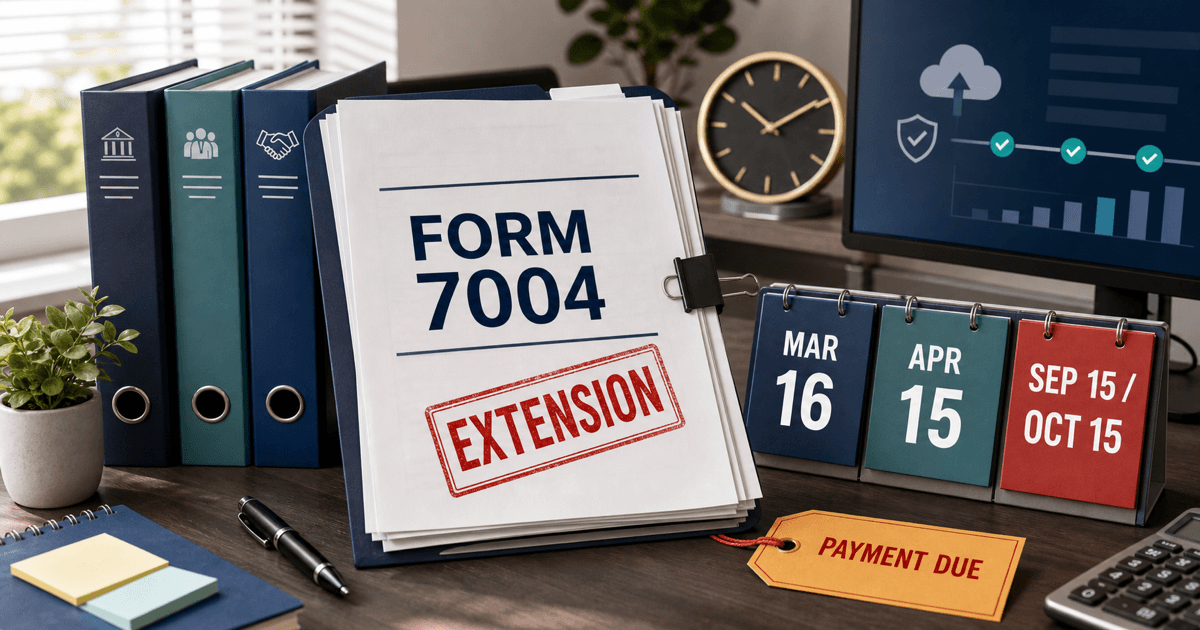
Form 7004 Extension Deadline 2026
Use this for the exact business extension workflow behind Form 1065, including March 16 filing, September 15 extension, e-file proof, and payment caveats.
Read guide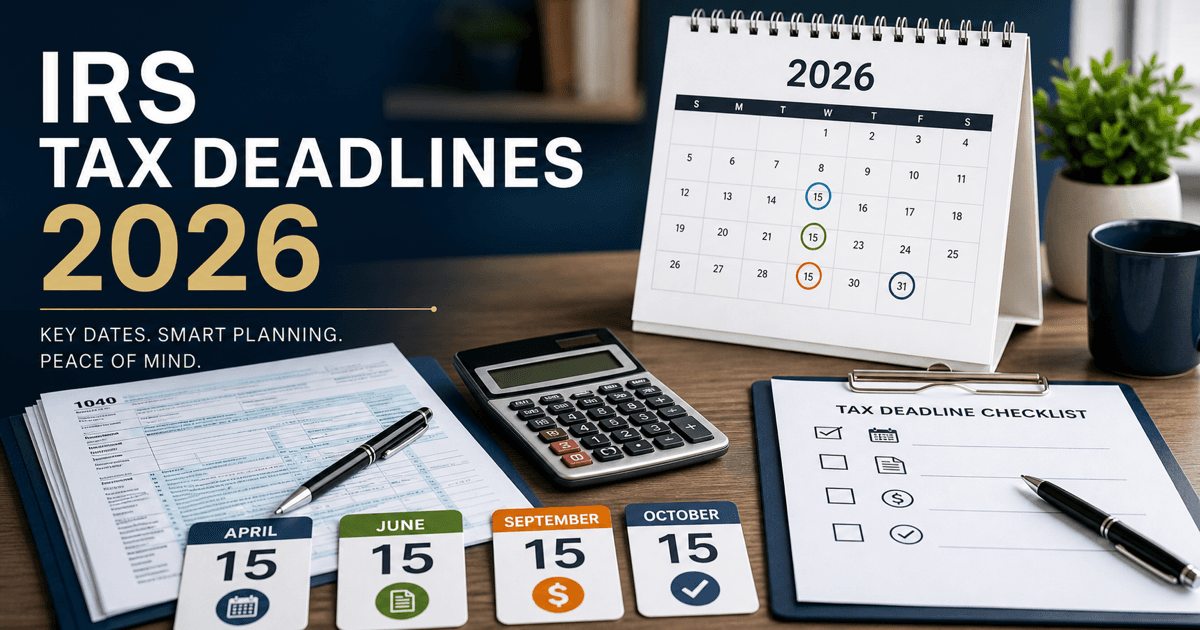
IRS Tax Deadlines 2026
Use this broader calendar for individual, entity, extension, estimated-payment, state, and refund timing around Form 1065.
Read guide
IRS Extension Deadline 2026
Use this when Form 7004, September 15 filing, proof of extension, or the no-extension-for-partner-payments rule is the main issue.
Read guideSources & References
- 1.IRS - Instructions for Form 1065(Accessed June 2026)
- 2.IRS - Publication 509, Tax Calendars(Accessed June 2026)
- 3.IRS - About Form 1065, U.S. Return of Partnership Income(Accessed June 2026)
- 4.IRS - About Schedule K-1 (Form 1065)(Accessed June 2026)
- 5.IRS - Instructions for Form 7004(Accessed June 2026)
- 6.IRS - About Form 7004(Accessed June 2026)
- 7.IRS - Estimated Taxes(Accessed June 2026)
- 8.IRS - Business Tax Account(Accessed June 2026)