
S Corporation Tax Deadline 2026: Form 1120-S, Schedule K-1, Extension, and Shareholder Dates
A practical 2026 S corporation tax deadline guide covering the March 16 Form 1120-S and Schedule K-1 due date, Form 7004 extension, September 15 extended deadline, S election timing, entity-level estimated tax dates, payroll and 1099 deadlines, penalties, and official IRS Business Tax Account video guidance.

Guide Oversight & Review Policy
CalculatorWallah guides are written to explain calculator assumptions, source limitations, and when users should move from a rough estimate to an official rule, institution policy, or clinician conversation.
Jitendra Kumar, Founder & Editorial Standards Lead. Updated June 25, 2026. Scope: Sales tax and tax-sensitive estimate tools, Education and GPA planning calculators, Health, protein, and screening-formula pages, Platform-wide publishing standards and methodology.
Tax credentialed review: Named internal reviewer: Iliyas Khan, Chief Operating Officer. External credentialed professional review is still required before this page is treated as professional advice.
Internal tax and sales-tax methodology reviewer. Review scope: calculator assumptions, labels, source context, workflow clarity, and compliance-sensitive disclaimers.
Relevant review context: CalculatorWallah tax and sales-tax calculator workflow owner; Source-first review of IRS, state revenue, rate, and filing-sensitive references; Compliance-sensitive labels, assumptions, and user-facing disclaimer review.
Required professional credentials: CPA, Enrolled Agent, licensed tax professional. Scope: tax formulas, jurisdiction assumptions, withholding language, filing-sensitive examples, and compliance caveats.
This page is educational planning support. A named CPA, EA, or licensed tax professional should review the page before it is positioned as tax advice or used for filing decisions.
Professional Review Status
This YMYL page has internal methodology review, but no external credentialed professional review is recorded yet.
- Reliance status
- Credentialed tax review required before professional reliance
- Required credentials
- CPA, Enrolled Agent, licensed tax professional
- Review scope
- tax formulas, jurisdiction assumptions, withholding language, filing-sensitive examples, and compliance caveats
Current reviewer: Iliyas Khan, Internal tax and sales-tax methodology reviewer.
This page is educational planning support. A named CPA, EA, or licensed tax professional should review the page before it is positioned as tax advice or used for filing decisions.
On This Page
S Corporation Tax Deadline 2026
The main S corporation tax deadline in 2026 was March 16, 2026 for calendar-year S corporations filing a 2025 Form 1120-S. March 15 fell on a Sunday, so the federal deadline moved to Monday, March 16.
This article is updated as of June 25, 2026. That means the original 2025 Form 1120-S deadline, shareholder Schedule K-1 deadline, and Form 7004 extension deadline have already passed for most calendar-year S corporations. If a valid extension was filed, the key federal date is now September 15, 2026.
Countdown Timer
The tracked 2026 IRS deadline sequence is complete.
Deadline Summary
March 16 was the original due date
Calendar-year S corporations had to file Form 1120-S, furnish shareholder K-1s, or file Form 7004 by March 16, 2026.
Extension Alert
September 15 requires Form 7004
The September deadline generally applies only when the S corporation requested a valid 6-month extension by the original due date.
Payment Alert
Extension is not payment relief
Form 7004 extends filing time. It does not extend time to pay any entity-level tax the S corporation owes.
S Corporation Action Buttons
Use calculators for planning. Use IRS systems and professional review for filing, extension, penalty, election, and payment decisions.
Important 2026 S Corporation Dates
S corporation deadlines sit between payroll, information returns, the entity return, shareholder K-1s, individual tax returns, and state pass-through rules. Treat the dates as one close calendar, not isolated forms.
2026 S Corporation Deadline Table
| Date | Deadline | Applies To | Action |
|---|---|---|---|
| February 2, 2026 | W-2 and 1099 operating deadline | S corporations with employees, owner-employees, contractors, or reportable vendors | This date has passed as of this June 25, 2026 update. Fix missed payroll or information returns before finalizing shareholder return packages. |
| March 16, 2026 | Form 1120-S and Schedule K-1 due | Calendar-year S corporations reporting 2025 tax year activity | File Form 1120-S, furnish Schedule K-1 and any required Schedule K-3 to shareholders, or file Form 7004 by this date. |
| March 16, 2026 | Form 7004 extension request due | Calendar-year S corporations needing more time to file the 2025 return | Request the automatic 6-month filing extension. Pay any entity-level tax due by the original due date. |
| March 16, 2026 | Many 2026 S elections due | Eligible calendar-year entities electing S corporation treatment effective January 1, 2026 | Form 2553 generally had to be filed no more than 2 months and 15 days after the beginning of the tax year. |
| April 15, 2026 | First S corporation entity estimated-tax installment if applicable | S corporations expecting certain entity-level taxes | Entity-level tax is not the same as shareholder individual estimated tax. Review both workflows separately. |
| June 15, 2026 | Second S corporation entity estimated-tax installment if applicable | Calendar-year S corporations with required entity-level estimated tax payments | Recalculate special entity-level taxes and pass-through information before midyear payments. |
| September 15, 2026 | Extended Form 1120-S and K-1 deadline | Calendar-year S corporations with a valid Form 7004 extension | File the completed return, furnish shareholder schedules, and resolve K-2/K-3 and state pass-through items. |
| December 15, 2026 | Fourth S corporation entity estimated-tax installment if applicable | Calendar-year S corporations that owe entity-level estimated tax | Use final-year projections to prevent underpayment exposure before year-end close. |
Fiscal-year S corporations and short-year returns use different due-date math. Disaster relief, state legal holidays, state tax law, or entity-specific elections can also move deadlines.
Form 1120-S and Schedule K-1 Deadline
Form 1120-S reports the income, gains, losses, deductions, credits, and other items of a domestic corporation or eligible entity with a valid S corporation election. The return drives shareholder Schedule K-1 reporting, which shareholders use on their own returns.
Entity Return
Form 1120-S
The S corporation files the federal entity return. Even if no entity-level income tax is due, the return can still be required.
Shareholder Package
Schedule K-1 and possible K-3
Shareholders need K-1 data before filing individual returns. International items may require Schedule K-2 and K-3 analysis.
Extension Result
K-1 timing follows the extended return
If Form 7004 was validly filed, shareholder schedules are generally finalized by the extended September 15 deadline.
Correction Risk
A corrected K-1 can ripple outward
If a K-1 changes after shareholders file, amended individual and state returns may need to be evaluated.
S Corporation Extension Rules
Form 7004 is the normal federal extension mechanism for Form 1120-S. For calendar-year S corporations, a timely Form 7004 generally gives a 6-month filing extension from March 16 to September 15, 2026. The extension request had to be filed by the original due date.
Extension Form
Form 7004
Use Form 7004 to request an automatic extension of time to file Form 1120-S. Keep acceptance proof with the permanent tax file.
Not Payment Relief
Tax still due at original date
Any entity-level tax due should be paid by the original return deadline even when the return itself is extended.
Shareholder Impact
K-1s may be delayed
Shareholders often cannot finish accurate individual returns until final K-1s are available, so entity extension planning affects owner filing.
State Layer
State extension may differ
Some states accept a federal extension, some require state action, and many still require payment by the original state due date.
Payment Rules and Estimated Taxes
S corporations are pass-through entities, but that does not mean the entity never pays federal tax. Entity-level tax can arise from built-in gains, excess net passive income, investment credit recapture, LIFO recapture, or other special items. IRS Form 1120-S instructions say tax due is generally payable by the return due date, not the extended due date.
For calendar-year S corporations that owe entity-level estimated tax, the IRS 2025 Form 1120-S instructions list 2026 installments on April 15, June 15, September 15, and December 15. Shareholders separately evaluate individual estimated tax on wages, K-1 income, investment income, and other personal tax items.
S Corporation Election Deadline
The S election is separate from the annual Form 1120-S return. Form 2553 is used by an eligible corporation or entity electing S corporation treatment. IRS instructions generally say to file no more than 2 months and 15 days after the beginning of the tax year the election is to take effect, or during the preceding tax year.
For many calendar-year entities seeking S corporation treatment effective January 1, 2026, that timing points to March 16, 2026 after the Sunday deadline adjustment. Late election relief can exist, but it should be handled with tax professional review.
Late Filing and Penalty Risk
IRS Form 1120-S instructions warn that penalties can apply when a return is late or does not include required information. For returns with no tax due, the penalty can be based on each month or part month the return is late, multiplied by the number of shareholders. If tax is due, unpaid-tax penalties and interest can be added.
The same IRS instructions list separate penalties for failing to furnish Schedule K-1 or Schedule K-3 information timely or correctly. If the corporation receives a penalty notice, the instructions say to respond with an explanation rather than attaching a penalty explanation to the original return.
Payroll, W-2, and 1099 Deadlines
S corporation tax deadline planning is weak if payroll and information returns are not closed first. Owner-employees may need W-2 wages. Contractors and vendors may need Forms 1099. Payroll tax returns and deposits need to reconcile to wage deductions and officer compensation on the S corporation return.
W-2 Workflow
Owner-employee wages
Forms W-2 for 2025 wages were due to employees and SSA on February 2, 2026. W-2 payroll should reconcile before the Form 1120-S is filed.
1099 Workflow
Contractor and vendor reporting
Forms 1099-NEC for 2025 nonemployee compensation were also due February 2, 2026. Other 1099 filing dates may differ.
Payroll Returns
Forms 941 and 940
Employment tax filings, deposits, and wage records can affect deductions, officer pay, and state payroll compliance.
State and Local S Corporation Deadlines
State S corporation deadlines can be more complicated than the federal date. A state may require an S corporation return, franchise tax, annual report, pass-through entity tax election or payment, composite return, nonresident withholding, local business tax, or secretary-of-state filing.
Do not assume that federal Form 7004 extends every state filing. Some states follow the federal extension automatically, some require a separate state extension, and many separate filing relief from payment obligations.
S Corporation Deadline Action Checklist
Use this checklist to clean up a missed March filing, finish an extended September filing, or build the next year-end close process.
Documents Needed
- Final books, trial balance, profit and loss statement, balance sheet, bank reconciliations, and loan schedules.
- Shareholder ownership records, stock basis and debt basis support, distributions, contributions, and shareholder loan records.
- Payroll records, owner-employee W-2s, Forms 941, Form 940, payroll tax deposits, and officer compensation support.
- 1099 records, vendor W-9s, contractor payments, rent, interest, legal fees, and state information-return records.
- Prior-year return, prior-year Schedule K-1s, depreciation schedules, fixed-asset records, state returns, and notices.
Filing Steps
- Confirm the entity is actually an S corporation for the tax year, including election status and any termination issue.
- Reconcile book income to tax income, owner payroll to payroll returns, and distributions to shareholder basis records.
- Prepare Form 1120-S, Schedule K, Schedule K-1, and any required Schedule K-2 or K-3 items before shareholder return work begins.
- File Form 7004 by the original due date if more time is needed, and pay entity-level tax that may be due.
- Deliver shareholder K-1 packages and keep proof of electronic or physical delivery.
Mistakes to Avoid
- Treating September 15 as available without a timely Form 7004 extension.
- Assuming an S corporation never owes entity-level federal tax.
- Issuing K-1s before payroll, W-2, 1099, depreciation, and shareholder basis records are reconciled.
- Ignoring state pass-through entity tax, franchise tax, composite return, or nonresident withholding requirements.
- Mixing owner wages and shareholder distributions without payroll and reasonable-compensation review.
Shareholder Checklist
- Wait for a final Schedule K-1 before filing a shareholder individual return unless a professional advises otherwise.
- Track basis, suspended losses, distributions, loans, guarantees, and prior-year carryovers outside the K-1 alone.
- Compare K-1 income with shareholder estimated payments and W-2 withholding before the individual deadline.
- Review whether K-1 information affects QBI, passive activity limits, net investment income tax, credits, or state returns.
- If a corrected K-1 arrives after filing, evaluate whether an amended return is needed.
Calculator Tools for S Corporation Planning
CalculatorWallah tools do not prepare Form 1120-S, Schedule K-1, Form 7004, or Form 2553. Use official IRS systems and tax software for filing. Use calculators to review payroll, shareholder withholding, FICA, estimated-tax pressure, and individual tax impact.
Owner Payroll
Check wages and withholding
Use the Paycheck Calculator when reviewing owner-employee wages, pre-tax deductions, and federal withholding before W-2 and K-1 planning.
Payroll Tax
Separate FICA from pass-through income
Use the FICA Tax Calculator to separate Social Security and Medicare tax on wages from shareholder K-1 income.
Shareholder Return
Estimate individual tax impact
Use the Federal Income Tax Calculator after K-1 income, W-2 wages, deductions, credits, and estimated payments are known.
Mixed Income
Compare S corp, W-2, and 1099 flows
Use the Self-Employment Tax Calculator carefully when comparing contractor income, Schedule C profit, and S corporation wage/distribution structures.
Official IRS Video
I found an official IRS Business Tax Account video that is relevant to S corporation tax account access. I did not find a current official IRS video dedicated only to the 2026 S corporation filing deadline, so the dates in this article are based on written IRS instructions and Publication 509.
IRS: Business Tax Account Overview
This IRS video is useful for understanding Business Tax Account access for eligible entities and authorized users. Written IRS instructions should control filing-date and extension decisions.
S Corporation Deadline Questions
The FAQ schema for this page covers the core S corporation deadline issues: March 16 filing, Schedule K-1, Form 7004, September 15 extension, Form 2553 election timing, estimated taxes, shareholder return timing, penalties, LLCs taxed as S corporations, and state deadline differences.
Schema, Trust, and Updates
This page is maintained as a business tax deadline guide, not individualized tax, legal, payroll, accounting, or entity-formation advice. It is marked in the tax article cluster, uses FAQ schema, includes VideoObject schema for the official IRS Business Tax Account video, and cites IRS Form 1120-S, Publication 509, Form 7004, Form 2553, Business Tax Account, e-file, and payroll sources.
Last updated: June 25, 2026. Deadline-sensitive S corporation facts should be checked against current IRS instructions, state revenue agency rules, secretary-of-state requirements, payroll provider records, and qualified tax professional review before filing, paying, extending, or responding to penalties.
Frequently Asked Questions
Related Calculators
S Corp Salary vs Distribution Tax Calculator
Compare owner-employee wages, payroll taxes, distributions, and shareholder cash planning.
Use S Corp Salary vs Distribution Tax CalculatorTax Deadline Calendar 2026-2027
Track Form 1120-S, K-1, Form 7004, payroll, 1099, and estimated-tax dates together.
Use Tax Deadline Calendar 2026-2027Payroll Tax Deposit Schedule Calculator
Review owner-employee payroll deposit timing before completing W-2 and 1120-S support.
Use Payroll Tax Deposit Schedule CalculatorIRS Tax Extension Deadline Calculator
Check the original and extended filing windows for S corporation and owner return workflows.
Use IRS Tax Extension Deadline CalculatorTax Document Checklist Builder
Build shareholder K-1, payroll, basis, distribution, and state document lists before filing.
Use Tax Document Checklist BuilderPaycheck Calculator
Review officer wages and withholding before comparing W-2 payroll to K-1 flow-through income.
Use Paycheck CalculatorFICA Tax Calculator
Estimate Social Security and Medicare taxes on S corporation owner-employee wages.
Use FICA Tax CalculatorFederal Income Tax Calculator
Model shareholder Form 1040 impact after Schedule K-1 income, deductions, and credits.
Use Federal Income Tax CalculatorTax Refund Calculator
Check whether shareholder withholding and estimated payments cover K-1 income.
Use Tax Refund CalculatorSelf-Employment Tax Calculator
Use carefully when comparing contractor, Schedule C, and S corporation wage/K-1 structures.
Use Self-Employment Tax CalculatorRelated Guides

Form 2553 Deadline 2026
Use this for the S corporation election deadline, 2 months and 15 days rule, shareholder consent, LLC S elections, and late-election relief.
Read guide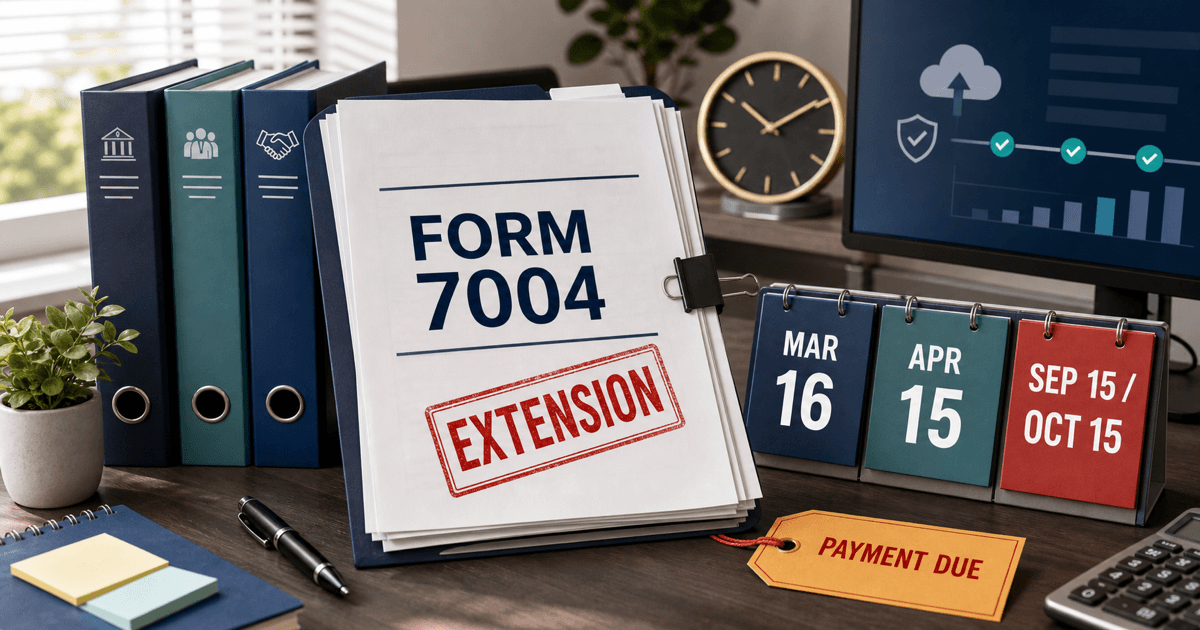
Form 7004 Extension Deadline 2026
Use this for the Form 7004 mechanics behind the March 16 S corporation extension request and September 15 extended filing date.
Read guide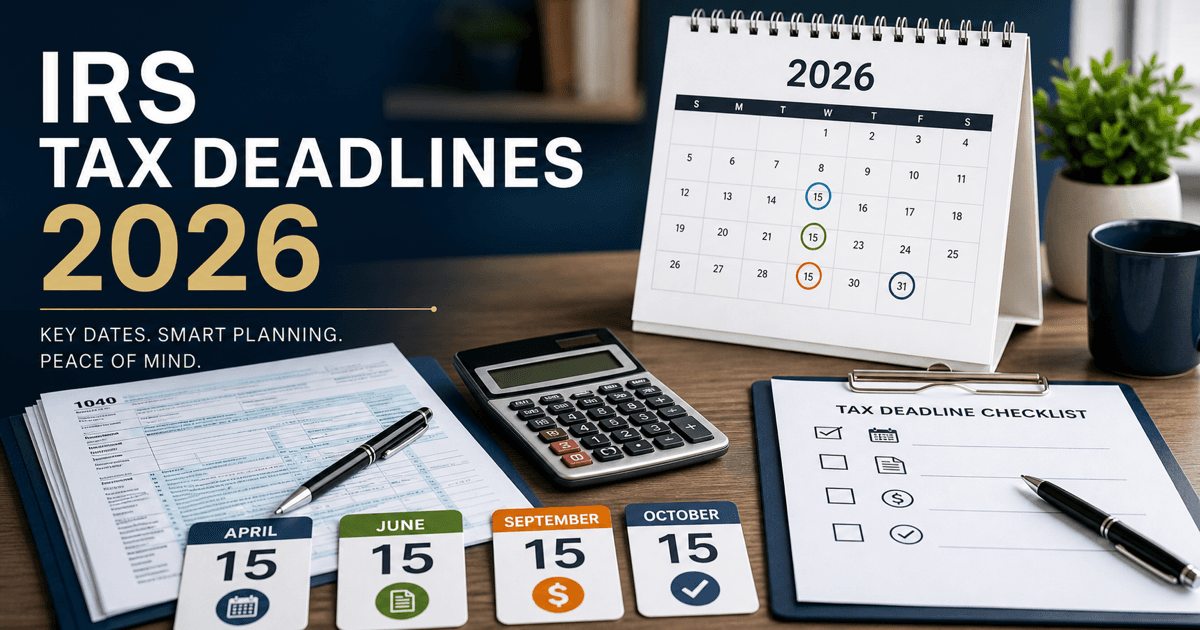
IRS Tax Deadlines 2026
Use this broader calendar for individual, entity, extension, estimated-payment, refund, and state deadline context.
Read guide
Partnership Tax Deadline 2026
Use this to compare Form 1120-S S corporation deadlines with Form 1065 partnership, LLC partnership, and partner K-1 timing.
Read guideSources & References
- 1.IRS - 2025 Instructions for Form 1120-S(Accessed June 2026)
- 2.IRS - Publication 509, Tax Calendars(Accessed June 2026)
- 3.IRS - About Form 1120-S(Accessed June 2026)
- 4.IRS - Instructions for Form 7004(Accessed June 2026)
- 5.IRS - About Form 7004(Accessed June 2026)
- 6.IRS - Instructions for Form 2553(Accessed June 2026)
- 7.IRS - Business Tax Account(Accessed June 2026)
- 8.IRS - E-file for Businesses and Self-Employed Taxpayers(Accessed June 2026)
- 9.IRS - Topic No. 752, Filing Forms W-2 and W-3(Accessed June 2026)