
Estimated Tax Underpayment Penalty Calculator
Estimate 2026 IRS estimated-tax penalty exposure from current-year tax, prior-year safe harbor, withholding, quarterly payments, and the underpayment rate.
Last Updated: May 24, 2026
Use total tax after refundable credits, before estimated tax payments.
Prior-year total tax is used for the 100% or 110% safe harbor test.
High-income taxpayers may need 110% of prior-year tax for safe harbor.
Married filing separately uses the lower $75,000 AGI threshold.
This calculator spreads withholding evenly across the four installment periods.
Default reflects the Q2 2026 IRS underpayment rate. IRS rates change quarterly.
Payment due April 15, 2026.
Payment due June 15, 2026.
Payment due September 15, 2026.
Payment due January 15, 2027.
Estimated Underpayment Penalty
$0.00
Safe Harbor Status
Likely safe harbor met
Safe Harbor Target
$24,000.00
Total Paid During Year
$24,000.00
Balance Due At Filing
$6,000.00
Penalty Rate Used
6.00%
This is a planning estimate. IRS Form 2210 can use daily compounding, multiple quarterly rates, payment allocation rules, withholding elections, and the annualized income installment method for uneven income.
Required annual payment
$12,000.00 after treating withholding as paid during the year. Quarterly timing still matters.
Largest installment gap
$0.00 across the regular installment periods.
Installment due dates
April 15, June 15, September 15, and January 15 for regular 2026 individual estimates.
Important Disclaimer
This calculator provides an educational estimate for planning and comparison only. It is not tax, legal, financial, medical, lending, insurance, payroll, compliance, or institutional advice and it is not an official determination. Rules, rates, eligibility, formulas, and source data can change or depend on facts not captured here. Verify the result against official sources and qualified professional guidance before filing, paying, diagnosing, borrowing, investing, hiring, or making a compliance-sensitive decision.
Professional Review Status
This YMYL page has internal methodology review, but no external credentialed professional review is recorded yet.
- Reliance status
- Credentialed tax review required before professional reliance
- Required credentials
- CPA, Enrolled Agent, licensed tax professional
- Review scope
- tax formulas, jurisdiction assumptions, withholding language, filing-sensitive examples, and compliance caveats
Current reviewer: Iliyas Khan, Internal tax and sales-tax methodology reviewer.
This page is educational planning support. A named CPA, EA, or licensed tax professional should review the page before it is positioned as tax advice or used for filing decisions.
Tax credentialed review: professional reliance limit
This page is educational planning support. A named CPA, EA, or licensed tax professional should review the page before it is positioned as tax advice or used for filing decisions. Results should be treated as a preliminary estimate, not a filing instruction, diagnosis, product recommendation, eligibility decision, or compliance sign-off. Required professional review: CPA, Enrolled Agent, licensed tax professional. Source expectation: Review should cite current IRS, state revenue department, payroll-tax, or official tax authority sources where applicable.
Checked by Iliyas Khan
Estimated Tax Underpayment Penalty Calculator is checked for formula labels, source links, and result limits.
Iliyas Khan, Chief Operating Officer. Updated May 24, 2026. Scope: tax calculators.
Tax credentialed review: Named internal reviewer: Iliyas Khan, Chief Operating Officer. External credentialed professional review is still required before this page is treated as professional advice.
Internal tax and sales-tax methodology reviewer. Review scope: calculator assumptions, labels, source context, workflow clarity, and compliance-sensitive disclaimers.
Relevant review context: CalculatorWallah tax and sales-tax calculator workflow owner; Source-first review of IRS, state revenue, rate, and filing-sensitive references; Compliance-sensitive labels, assumptions, and user-facing disclaimer review.
Required professional credentials: CPA, Enrolled Agent, licensed tax professional. Scope: tax formulas, jurisdiction assumptions, withholding language, filing-sensitive examples, and compliance caveats.
This page is educational planning support. A named CPA, EA, or licensed tax professional should review the page before it is positioned as tax advice or used for filing decisions.
How To Use The Estimated Tax Underpayment Penalty Calculator
Step 1: Enter expected current-year total tax
Use your projected 2026 total tax after refundable credits, before subtracting estimated tax payments. This is the starting point for the 90% current-year safe-harbor test.
Step 2: Add prior-year tax and AGI
Enter 2025 total tax and adjusted gross income. The calculator applies the 100% prior-year safe harbor, or 110% when the higher-income threshold applies.
Step 3: Enter withholding and quarterly payments
Add federal withholding and the estimated payments made for each installment period. The regular method treats withholding as paid evenly across the year.
Step 4: Review safe harbor and penalty exposure
Check whether the small-balance exception or regular-installment safe harbor appears to be met. If not, use the estimated penalty and installment shortfall as a planning signal.
How This Calculator Works
This calculator estimates whether a 2026 individual taxpayer may have exposure to the IRS underpayment of estimated tax penalty. It compares your projected current-year tax with two common safe-harbor targets: 90% of current-year tax and 100% of prior-year tax. For higher-income taxpayers, the prior-year test is increased to 110%.
After the annual safe-harbor target is set, the calculator subtracts federal withholding and spreads the remaining required payment across four regular installment periods. It then compares each quarterly payment against the cumulative amount that should have been paid by that deadline.
If an installment is short, the calculator applies the annual underpayment rate to the shortfall for the approximate number of days until the next estimated-tax deadline. This produces a practical planning estimate, not an exact Form 2210 computation.
Estimated Tax Underpayment Penalty: What To Know
Safe harbor is about amount and timing
Estimated tax is a pay-as-you-go system. That means the IRS looks not only at how much tax was paid by the end of the year, but also whether enough was paid by each installment deadline. A taxpayer who waits until the fourth quarter to catch up may still owe a penalty for earlier underpaid periods.
To plan the timing side, pair this calculator with the Estimated Tax Payment Due Date Calculator. It shows the next IRS installment deadline and can help divide a remaining annual target into timely payments.
Common safe-harbor tests
| Test | Planning threshold | Why it matters |
|---|---|---|
| Small-balance exception | Less than $1,000 after withholding | Can stop the Form 2210 penalty calculation early |
| Current-year safe harbor | 90% of current-year tax | Useful when current-year income is lower than last year |
| Prior-year safe harbor | 100% or 110% of prior-year tax | Useful when current-year income is higher or harder to forecast |
When Form 2210 can change the answer
Form 2210 can produce a different result from a quick estimate when payments were made on unusual dates, when withholding was not actually earned evenly, when income arrived unevenly, or when the taxpayer qualifies for a waiver. The annualized income installment method is especially important for freelancers, investors, partners, and business owners whose income is concentrated in one part of the year.
If your filing-season issue is different from estimated-tax underpayment, use the Late Filing and Late Payment Penalty Calculator for failure-to-file and failure-to-pay penalties, or the IRS Tax Extension Deadline Calculator to confirm filing-extension timing.
Best use cases for this calculator
This tool is best for early planning: deciding whether you need to increase withholding, make an extra estimated payment, or rebalance your remaining installments. It is useful for self-employed taxpayers, 1099 workers, investors with realized gains, retirees with taxable distributions, and employees with bonus or equity income that is not fully covered by withholding.
For broader tax planning, compare the result with the Tax Refund Calculator 2026 and the Self-Employment Tax Calculator. Those tools can help refine the tax figure that feeds this underpayment estimate.
Keep the research moving with Estimated Tax Payment Due Date Calculator, Late Filing and Late Payment Penalty Calculator, Tax Refund Calculator 2026, and FICA Tax Calculator.
Frequently Asked Questions
Related Calculators
Estimated Tax Payment Due Date Calculator
Find IRS estimated tax due dates and split remaining payments across installments.
Use Estimated Tax Payment Due Date CalculatorLate Filing and Late Payment Penalty Calculator
Estimate IRS failure-to-file and failure-to-pay penalties from unpaid tax and dates.
Use Late Filing and Late Payment Penalty CalculatorTax Refund Calculator 2026
Estimate refund or balance due after withholding, credits, and estimated payments.
Use Tax Refund Calculator 2026FICA Tax Calculator
Calculate Social Security and Medicare taxes with 2026 thresholds.
Use FICA Tax CalculatorRelated Guides

Form 1040 Deadline 2026
Use this for the April 15 Form 1040 filing and payment deadline, October 15 extension date, late-filing cleanup, and 1040-specific checklist.
Read guide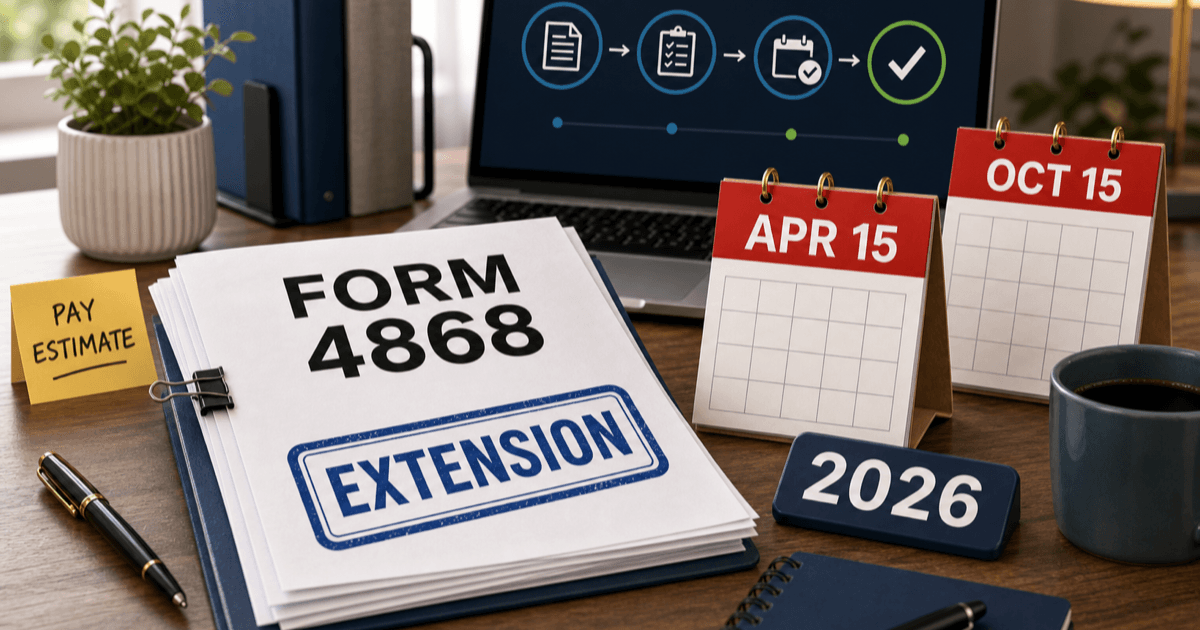
Form 4868 Deadline 2026
Use this for individual tax extension timing, the April 15 Form 4868 request deadline, October 15 extended filing date, payment estimates, online extension methods, and proof of filing.
Read guide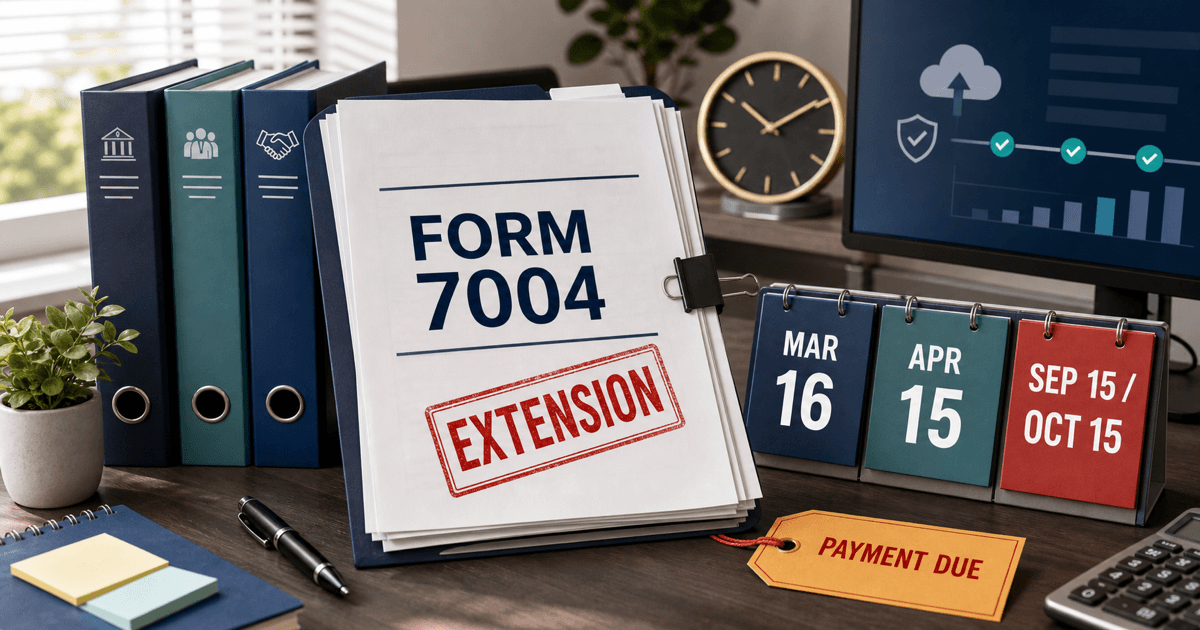
Form 7004 Extension Deadline 2026
Use this for business extension due dates, March 16 and April 15 Form 7004 deadlines, September 15 and October 15 extended filing dates, e-file rules, and no-extension-to-pay cleanup.
Read guide
Form 2553 Deadline 2026
Use this for S corporation election timing, the March 16 calendar-year deadline, 2 months and 15 days rule, shareholder consent, LLC S elections, late-election relief, and Form 1120-S follow-through.
Read guideSources & References
- 1.IRS - Underpayment of Estimated Tax by Individuals Penalty(Accessed May 2026)
- 2.IRS - Publication 505, Tax Withholding and Estimated Tax(Accessed May 2026)
- 3.IRS - Form 2210(Accessed May 2026)
- 4.IRS - Quarterly Interest Rates(Accessed May 2026)