
Home Office Deduction Calculator
Compare the simplified and actual home office deduction methods with qualified-use checks, square footage, actual expenses, depreciation, income limits, carryover, and estimated tax savings.
Last Updated: May 25, 2026
Employees generally cannot deduct unreimbursed home office expenses under current federal rules.
Most home offices must be used regularly and exclusively for business.
The space generally must be a principal place of business, client meeting area, or separate qualifying structure.
Select yes for qualified daycare, inventory, or product-sample exceptions described in IRS Publication 587.
Use the home's total finished area used for the allocation denominator.
Simplified method caps allowable space at 300 square feet.
Use 1-12 months for partial-year home office use.
Use 100% for regular exclusive offices; use a lower percentage for qualified nonexclusive daycare use.
Enter gross income from the business connected with the home office.
Enter ordinary business expenses before the business-use-of-home deduction.
Examples: repairs or paint only for the office area.
Examples: rent, utilities, insurance, repairs, mortgage interest, property tax, HOA, and security.
Used for an approximate 39-year home office depreciation estimate under the actual method.
Enter disallowed actual-method home office expense carryover, if any.
Use your estimated federal marginal income tax rate.
Use 0% if no state income tax applies.
Approximate Schedule C SE tax savings; use 0% for partner or non-SE scenarios.
Recommended Method
Actual expense method
Recommended Deduction
$3,721
Estimated Tax Savings
$1,530
Business Use Percentage
10%
Simplified method
- Allowed square feet
- 180 sq ft
- Before income limit
- $900
- Allowed deduction
- $900
- Tax savings estimate
- $370
Actual expense method
- Direct expenses
- $450
- Allocated indirect expenses
- $2,450
- Estimated depreciation
- $821
- Allowed deduction
- $3,721
Income limitation
Business income before the home office deduction is $54,000.
Method difference
The two methods differ by $2,821 after the income limit.
Carryover / disallowed
Actual-method carryover estimate: $0. Current disallowed amount: $0.
Eligibility and recordkeeping note
The estimate treats the space as qualified business use based on the inputs. Actual expenses are higher in this estimate, but they require stronger records and can involve depreciation tracking. This estimate does not replace Form 8829, depreciation schedules, partner agreement review, daycare time-use worksheets, or state conformity checks.
Important Disclaimer
This calculator provides an educational estimate for planning and comparison only. It is not tax, legal, financial, medical, lending, insurance, payroll, compliance, or institutional advice and it is not an official determination. Rules, rates, eligibility, formulas, and source data can change or depend on facts not captured here. Verify the result against official sources and qualified professional guidance before filing, paying, diagnosing, borrowing, investing, hiring, or making a compliance-sensitive decision.
Professional Review Status
This YMYL page has internal methodology review, but no external credentialed professional review is recorded yet.
- Reliance status
- Credentialed tax review required before professional reliance
- Required credentials
- CPA, Enrolled Agent, licensed tax professional
- Review scope
- tax formulas, jurisdiction assumptions, withholding language, filing-sensitive examples, and compliance caveats
Current reviewer: Iliyas Khan, Internal tax and sales-tax methodology reviewer.
This page is educational planning support. A named CPA, EA, or licensed tax professional should review the page before it is positioned as tax advice or used for filing decisions.
Tax credentialed review: professional reliance limit
This page is educational planning support. A named CPA, EA, or licensed tax professional should review the page before it is positioned as tax advice or used for filing decisions. Results should be treated as a preliminary estimate, not a filing instruction, diagnosis, product recommendation, eligibility decision, or compliance sign-off. Required professional review: CPA, Enrolled Agent, licensed tax professional. Source expectation: Review should cite current IRS, state revenue department, payroll-tax, or official tax authority sources where applicable.
Checked by Iliyas Khan
Home Office Deduction Calculator is checked for formula labels, source links, and result limits.
Iliyas Khan, Chief Operating Officer. Updated May 25, 2026. Scope: tax calculators.
Tax credentialed review: Named internal reviewer: Iliyas Khan, Chief Operating Officer. External credentialed professional review is still required before this page is treated as professional advice.
Internal tax and sales-tax methodology reviewer. Review scope: calculator assumptions, labels, source context, workflow clarity, and compliance-sensitive disclaimers.
Relevant review context: CalculatorWallah tax and sales-tax calculator workflow owner; Source-first review of IRS, state revenue, rate, and filing-sensitive references; Compliance-sensitive labels, assumptions, and user-facing disclaimer review.
Required professional credentials: CPA, Enrolled Agent, licensed tax professional. Scope: tax formulas, jurisdiction assumptions, withholding language, filing-sensitive examples, and compliance caveats.
This page is educational planning support. A named CPA, EA, or licensed tax professional should review the page before it is positioned as tax advice or used for filing decisions.
How To Use The Home Office Deduction Calculator
Step 1: Confirm the taxpayer type and use test
Choose self-employed, partner, or employee status and confirm regular exclusive use, principal-place/client-use status, or a daycare/inventory exception.
Step 2: Enter square footage and time used
Add total home square feet, home office square feet, months used, and any daycare time-use percentage.
Step 3: Add business income before the deduction
Enter gross business income and ordinary business expenses before the home office deduction so the income limit can be estimated.
Step 4: Compare actual expenses
Add direct office expenses, indirect home expenses, building basis excluding land, and any prior-year actual-method carryover.
Step 5: Review method and tax savings
Compare simplified vs actual deductions, tax savings, carryover, disallowed amounts, and the recommended method.
How This Calculator Works
The calculator first checks whether the inputs support a qualified home office. Employee status blocks the federal deduction, while self-employed and partner scenarios continue when regular business use and principal-place, client-meeting, separate-structure, or qualifying exception inputs are satisfied.
The simplified method uses $5 per square foot, capped at 300 square feet. The calculator prorates the simplified result for partial-year use and applies a time-use percentage when the daycare or inventory exception input indicates nonexclusive qualifying use.
The actual method allocates indirect home expenses by business-use percentage, adds direct office expenses, estimates annual depreciation from building basis over 39 years, and includes prior-year carryover. Both methods are limited by business income before the home office deduction.
Home Office Deduction Planning: Simplified Method, Actual Expenses, And Form 8829
Simplified method is easier, not always larger
The simplified method is useful when a qualified office is small, records are limited, or avoiding depreciation tracking matters. It uses a prescribed rate instead of asking for rent, utilities, insurance, repairs, mortgage interest, real estate taxes, and depreciation. The tradeoff is the 300-square-foot cap.
Actual expenses can produce a larger deduction when home costs are high or the business area is large. But the actual method requires stronger records, allocation support, and depreciation tracking. Publication 587 also explains home-sale and basis implications when depreciation is allowed or allowable.
Simplified vs actual method comparison
| Planning item | Simplified method | Actual method | Why it matters |
|---|---|---|---|
| Deduction base | $5 per qualified square foot | Direct expenses plus allocated home expenses | Actual can be larger when home costs are high |
| Square-foot cap | 300 square feet | No simplified square-foot cap | Large offices may favor actual expenses |
| Depreciation | Not separately calculated | Tracked on Form 8829 / depreciation records | Affects records and future home-sale planning |
| Carryover | No simplified-method carryover | Disallowed expenses may carry forward | Income-limited years may favor actual tracking |
The deduction depends on business income
A home office deduction generally cannot turn the business into a larger loss through the business-use-of-home calculation. That is why this calculator asks for gross business income and ordinary business expenses before the home office deduction. If the business is already near break-even, the allowed deduction can be lower than the square-foot or actual-expense amount.
Connect the result to estimated tax planning
Use this page for the home-office deduction comparison, then review the effect on freelancer payments with the Quarterly Tax Payment Calculator for Freelancers. For total federal income-tax impact, use the Federal Income Tax Calculator.
Keep the research moving with Self-Employment Tax Calculator, Taxable Income Calculator, Quarterly Tax Payment Calculator for Freelancers, and FICA Tax Calculator.
Frequently Asked Questions
Related Calculators
Self-Employment Tax Calculator
Estimate self-employment tax before and after Schedule C deductions.
Use Self-Employment Tax CalculatorTaxable Income Calculator
Estimate AGI, deductions, and taxable income after business expense planning.
Use Taxable Income CalculatorQuarterly Tax Payment Calculator for Freelancers
Estimate quarterly payments from freelancer profit, deductions, SE tax, and safe harbor.
Use Quarterly Tax Payment Calculator for FreelancersFICA Tax Calculator
Calculate Social Security and Medicare taxes with 2026 thresholds.
Use FICA Tax CalculatorRelated Guides
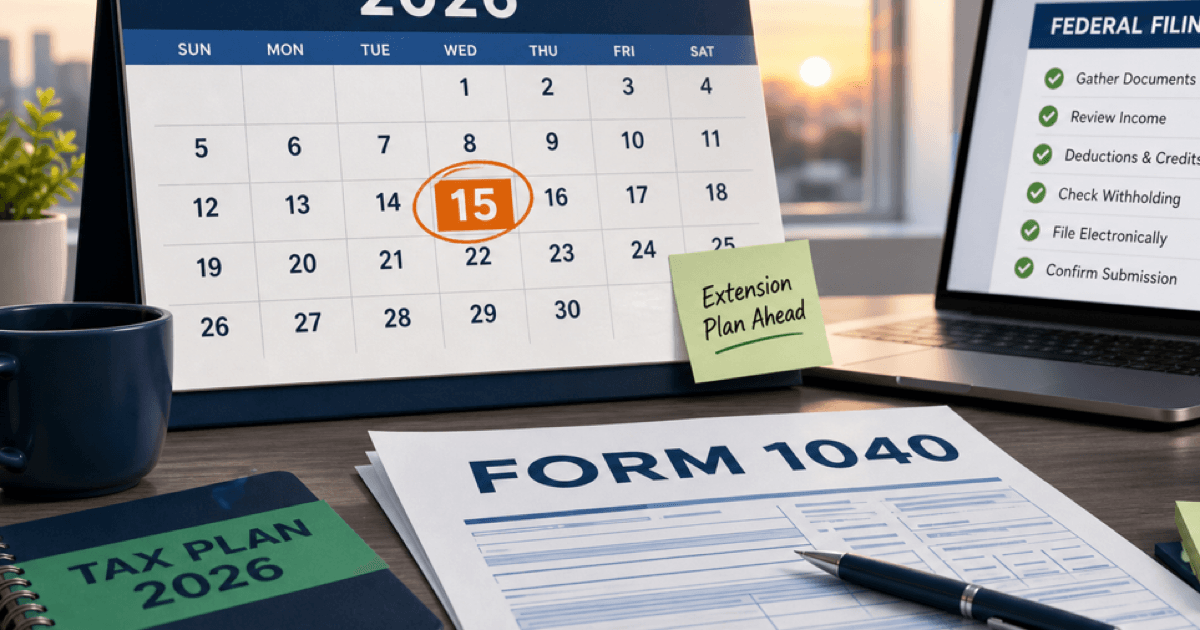
Form 1040 Deadline 2026
Use this for the April 15 Form 1040 filing and payment deadline, October 15 extension date, late-filing cleanup, and 1040-specific checklist.
Read guide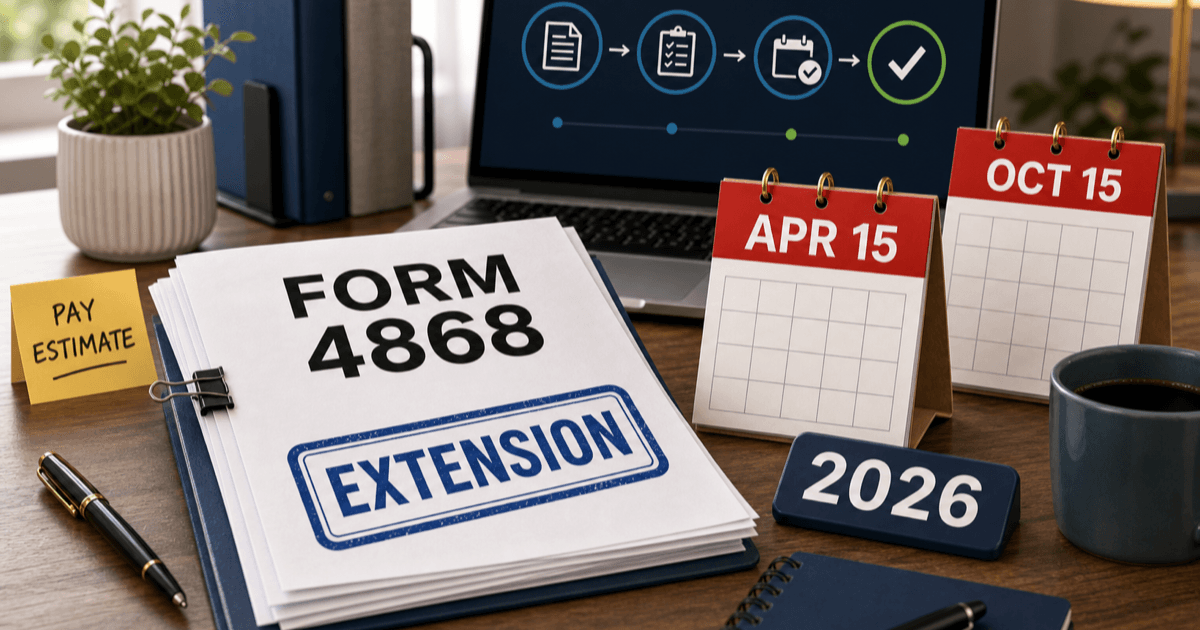
Form 4868 Deadline 2026
Use this for individual tax extension timing, the April 15 Form 4868 request deadline, October 15 extended filing date, payment estimates, online extension methods, and proof of filing.
Read guide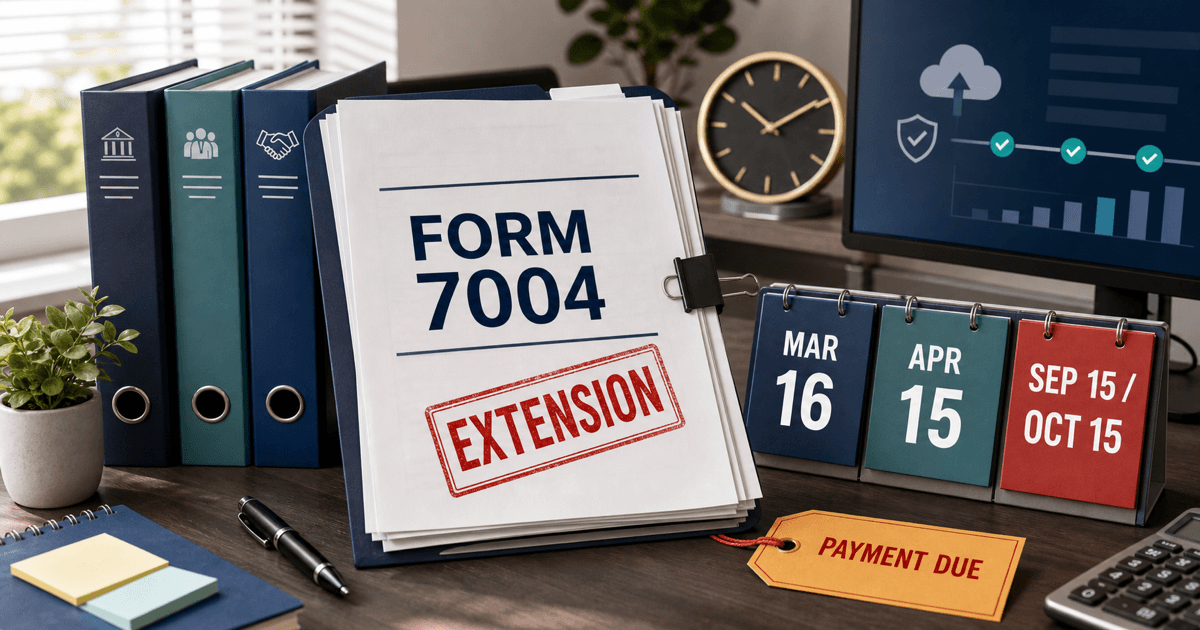
Form 7004 Extension Deadline 2026
Use this for business extension due dates, March 16 and April 15 Form 7004 deadlines, September 15 and October 15 extended filing dates, e-file rules, and no-extension-to-pay cleanup.
Read guide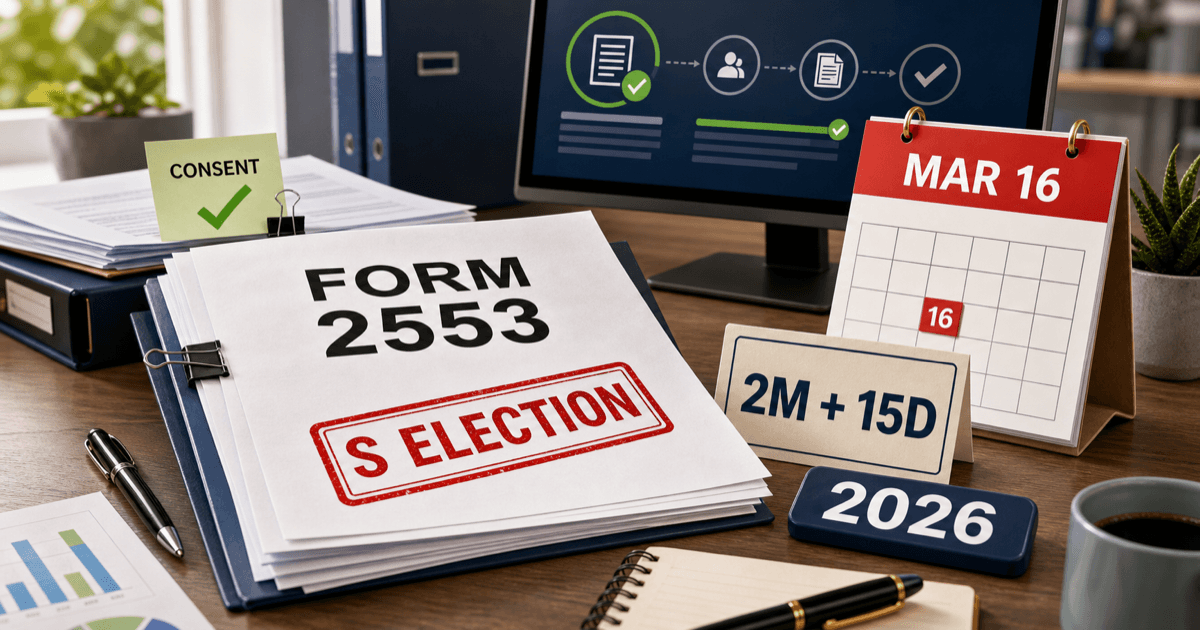
Form 2553 Deadline 2026
Use this for S corporation election timing, the March 16 calendar-year deadline, 2 months and 15 days rule, shareholder consent, LLC S elections, late-election relief, and Form 1120-S follow-through.
Read guideSources & References
- 1.IRS Publication 587 - Business Use of Your Home(Accessed May 2026)
- 2.IRS - About Form 8829, Expenses for Business Use of Your Home(Accessed May 2026)
- 3.IRS - About Schedule C, Profit or Loss from Business(Accessed May 2026)
- 4.IRS - Home Office Deduction(Accessed May 2026)