
Tax Document Checklist Builder
Create a personalized tax filing checklist for income forms, deductions, credits, dependents, investments, self-employment records, payments, and carryovers.
Last Updated: May 24, 2026
Choose the profile that best matches the return you are preparing.
Select itemized if you expect mortgage interest, large donations, or high medical costs.
Checklist Items
6
Required Items
2
If Applicable
3
Readiness Score
86%
Organizer summary
Start with identity, income, withholding, and prior-year records, then add profile-based documents for dependents, self-employment, investing, homeownership, health coverage, and itemized deductions.
Identity Documents
Photo ID and taxpayer identification numbers
RequiredGather Social Security numbers or ITINs for you, your spouse, and dependents.
Income Documents
Forms W-2
RequiredCollect wage and withholding statements from each employer.
Forms 1099 for income
If applicableInclude 1099-NEC, 1099-MISC, 1099-K, 1099-INT, 1099-DIV, 1099-R, and similar forms.
Payments Documents
Estimated tax payment records
If applicableList quarterly federal and state estimated payments with dates and amounts.
Records Documents
Prior-year tax return
PlanningUse last year as a reference for carryovers, dependents, bank details, and missing forms.
IRS or state tax notices
If applicableKeep any notices about identity verification, offsets, balances, or prior-year changes.
Important Disclaimer
This calculator provides an educational estimate for planning and comparison only. It is not tax, legal, financial, medical, lending, insurance, payroll, compliance, or institutional advice and it is not an official determination. Rules, rates, eligibility, formulas, and source data can change or depend on facts not captured here. Verify the result against official sources and qualified professional guidance before filing, paying, diagnosing, borrowing, investing, hiring, or making a compliance-sensitive decision.
Professional Review Status
This YMYL page has internal methodology review, but no external credentialed professional review is recorded yet.
- Reliance status
- Credentialed tax review required before professional reliance
- Required credentials
- CPA, Enrolled Agent, licensed tax professional
- Review scope
- tax formulas, jurisdiction assumptions, withholding language, filing-sensitive examples, and compliance caveats
Current reviewer: Iliyas Khan, Internal tax and sales-tax methodology reviewer.
This page is educational planning support. A named CPA, EA, or licensed tax professional should review the page before it is positioned as tax advice or used for filing decisions.
Tax credentialed review: professional reliance limit
This page is educational planning support. A named CPA, EA, or licensed tax professional should review the page before it is positioned as tax advice or used for filing decisions. Results should be treated as a preliminary estimate, not a filing instruction, diagnosis, product recommendation, eligibility decision, or compliance sign-off. Required professional review: CPA, Enrolled Agent, licensed tax professional. Source expectation: Review should cite current IRS, state revenue department, payroll-tax, or official tax authority sources where applicable.
Checked by Iliyas Khan
Tax Document Checklist Builder is checked for formula labels, source links, and result limits.
Iliyas Khan, Chief Operating Officer. Updated May 24, 2026. Scope: tax calculators.
Tax credentialed review: Named internal reviewer: Iliyas Khan, Chief Operating Officer. External credentialed professional review is still required before this page is treated as professional advice.
Internal tax and sales-tax methodology reviewer. Review scope: calculator assumptions, labels, source context, workflow clarity, and compliance-sensitive disclaimers.
Relevant review context: CalculatorWallah tax and sales-tax calculator workflow owner; Source-first review of IRS, state revenue, rate, and filing-sensitive references; Compliance-sensitive labels, assumptions, and user-facing disclaimer review.
Required professional credentials: CPA, Enrolled Agent, licensed tax professional. Scope: tax formulas, jurisdiction assumptions, withholding language, filing-sensitive examples, and compliance caveats.
This page is educational planning support. A named CPA, EA, or licensed tax professional should review the page before it is positioned as tax advice or used for filing decisions.
How To Use The Tax Document Checklist Builder
Step 1: Choose your filing profile
Select the profile that best matches your return, such as W-2 employee, family with dependents, freelancer, investor, or homeowner.
Step 2: Pick a deduction plan
Choose standard deduction, itemized deductions, or not sure. The checklist adds receipt categories when itemizing may matter.
Step 3: Add special record types
Check retirement, health coverage, HSA, Marketplace insurance, or prior-year carryovers if those records may affect your return.
Step 4: Build and organize the checklist
Use the generated categories to collect documents before filing and to flag records that may need professional review.
How This Calculator Works
This builder starts with the core tax records most individual filers need: identity information, prior-year return, wage statements, 1099 income forms, payment records, and IRS or state notices. It then adds checklist items based on the filing profile and deduction plan you select.
The tool separates required records from conditional records so the checklist is useful before every document has arrived. For example, a W-2 employee may only need a short list, while a freelancer may need income reports, invoices, expense receipts, mileage logs, home office support, and estimated tax payment records.
The readiness score is a planning indicator, not an IRS metric. A lower score usually means the selected profile has more required or conditional records to gather before the return can be prepared confidently.
Tax Filing Documents: What To Gather Before You File
Start with income documents
The IRS recommends keeping the documents and forms needed to file in one place. For most taxpayers, the first group includes Forms W-2 from employers and Forms 1099 for non-wage income. That can include interest, dividends, retirement distributions, unemployment, freelance income, platform payments, investment sales, and other reported income.
If you worked in the gig economy or received business payments through a platform, compare Forms 1099-NEC, 1099-MISC, and 1099-K against your own income records. Taxpayers are responsible for reporting accurate income even when a form is missing, delayed, corrected, or issued under a threshold.
Match deductions and credits to evidence
Deductions and credits need support. Families may need dependent information, child care provider details, education statements, and residency support. Itemizers may need mortgage interest, property tax, charitable contribution, medical expense, and state tax records. Self-employed taxpayers should keep business income and expense support available for inspection.
A strong document system prevents two common filing problems: missing a legitimate tax benefit because the paperwork was not ready, and claiming an amount that cannot be supported later. The goal is not to collect every receipt forever; it is to keep the records that explain each number entered on the return.
Do not forget payment and withholding records
Refund and balance-due outcomes depend heavily on tax already paid. Keep pay stubs, Forms W-2, Forms 1099 with withholding, estimated tax payment confirmations, extension payment records, and state payment records. These documents also help if you use the W-4 withholding adjustment calculator or the tax refund calculator.
Keep records long enough to defend the return
IRS recordkeeping rules depend on the tax situation. Many taxpayers keep filed returns and supporting documents for at least three years, but longer periods can apply. Property, business, investment basis, carryover, unfiled return, and fraud-related records may need longer retention. When in doubt, keep the records that prove income, basis, deductions, credits, payments, and return positions.
Keep the research moving with Tax Refund Calculator 2026, W-4 Withholding Adjustment Calculator, Quarterly Tax Payment Calculator for Freelancers, and FICA Tax Calculator.
Frequently Asked Questions
Related Calculators
Tax Refund Calculator 2026
Estimate refund or amount due after withholding, credits, and estimated payments.
Use Tax Refund Calculator 2026W-4 Withholding Adjustment Calculator
Use pay stubs and tax records to adjust withholding before filing season.
Use W-4 Withholding Adjustment CalculatorQuarterly Tax Payment Calculator for Freelancers
Estimate quarterly tax payments using freelance income and expense records.
Use Quarterly Tax Payment Calculator for FreelancersFICA Tax Calculator
Calculate Social Security and Medicare taxes with 2026 thresholds.
Use FICA Tax CalculatorRelated Guides
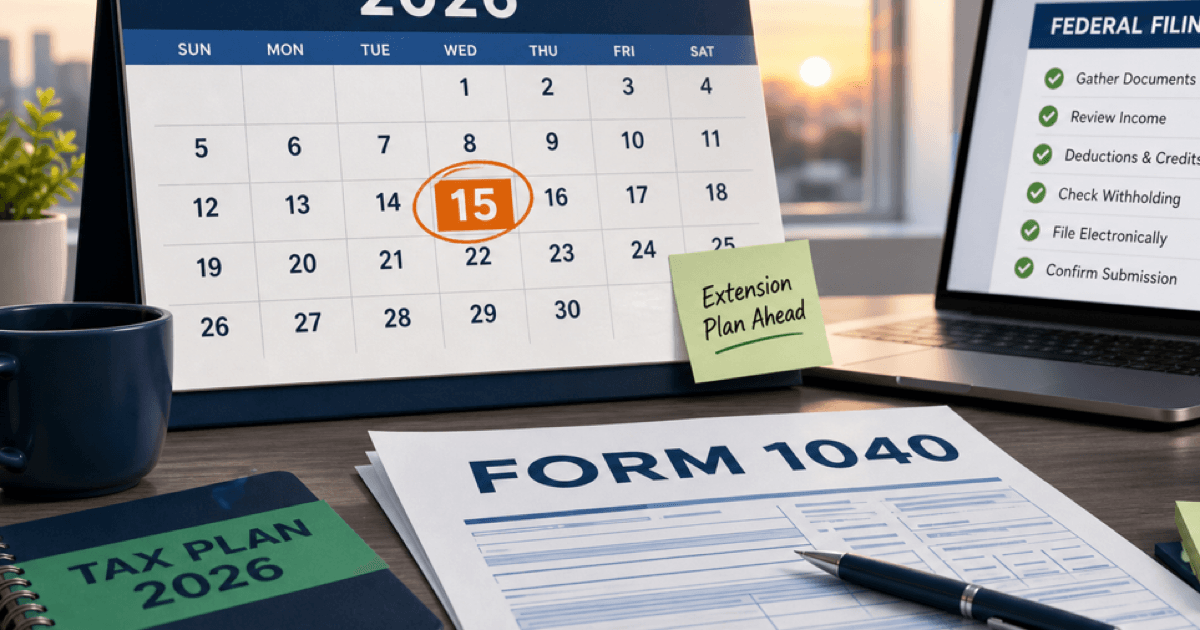
Form 1040 Deadline 2026
Use this for the April 15 Form 1040 filing and payment deadline, October 15 extension date, late-filing cleanup, and 1040-specific checklist.
Read guide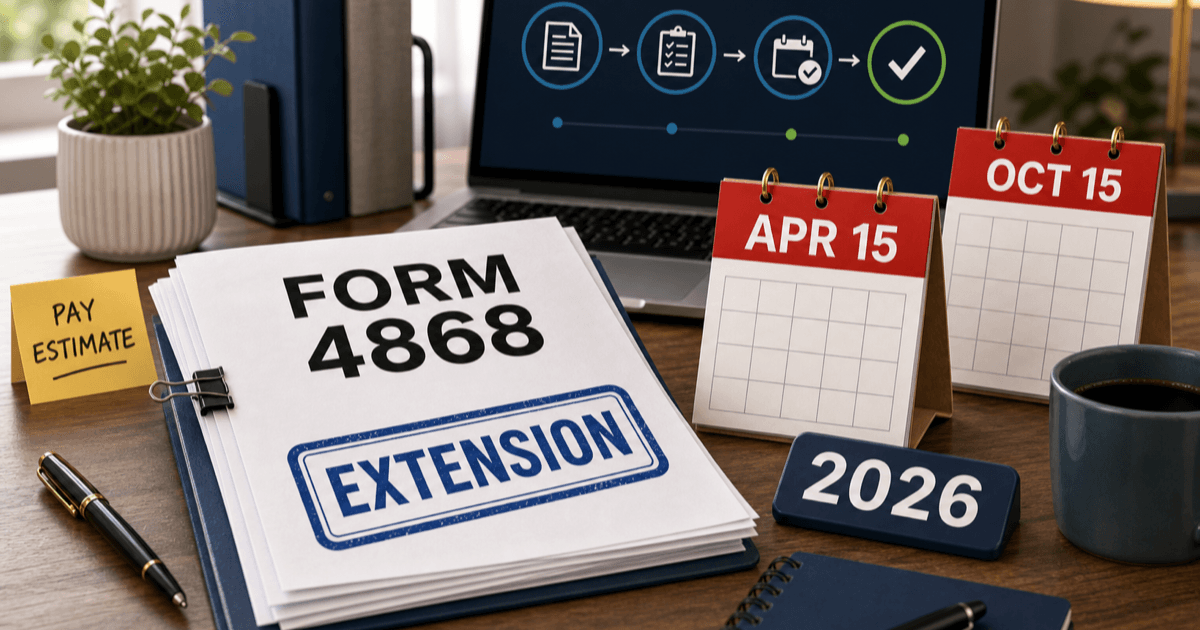
Form 4868 Deadline 2026
Use this for individual tax extension timing, the April 15 Form 4868 request deadline, October 15 extended filing date, payment estimates, online extension methods, and proof of filing.
Read guide
Form 7004 Extension Deadline 2026
Use this for business extension due dates, March 16 and April 15 Form 7004 deadlines, September 15 and October 15 extended filing dates, e-file rules, and no-extension-to-pay cleanup.
Read guide
Form 2553 Deadline 2026
Use this for S corporation election timing, the March 16 calendar-year deadline, 2 months and 15 days rule, shareholder consent, LLC S elections, late-election relief, and Form 1120-S follow-through.
Read guideSources & References
- 1.IRS - Gather Your Documents(Accessed May 2026)
- 2.IRS - Get Ready To File Your Taxes(Accessed May 2026)
- 3.IRS - How Long Should I Keep Records?(Accessed May 2026)
- 4.IRS - Tax Withholding Estimator(Accessed May 2026)