
Schedule C Profit and Tax Reserve Calculator
Estimate Schedule C net profit from gross receipts, refunds, cost of goods sold, and business expenses, then build a practical tax reserve for self-employment tax, federal income tax, state tax, safe-harbor targets, and cash-flow planning.
Last Updated: May 25, 2026
Use gross Schedule C receipts before returns, allowances, refunds, fees, or expenses.
Subtract refunds, returns, and customer allowances from gross receipts.
Use 0 if you do not sell inventory or track cost of goods sold.
Inventory, products, or resale purchases included in cost of goods sold.
Use for production labor included in cost of goods sold, not general contractor expenses.
Direct materials and production supplies tied to goods sold.
Other direct production or resale costs included in Schedule C Part III.
Ending inventory reduces cost of goods sold.
Use for business income not already included in gross receipts.
Use the deductible portion after mileage, business-use, and meal-limit rules.
Payments to subcontractors or freelancers, separate from employee payroll.
Use the deductible current-year depreciation or expensing amount from Form 4562 planning.
Optional W-2, spouse, interest, or other income for federal bracket context.
This reduces remaining Social Security wage-base room for SE tax.
2026 standard deduction for this status: $16,100.00
Planning estimate only; final deduction depends on eligibility and earned income limits.
Use deductible self-employed retirement contributions for planning.
Uses a simplified 20% section 199A planning estimate, subject to limits.
Use known credits that directly reduce federal income tax, not SE tax.
Flat planning rate applied to Schedule C net profit.
Optional safe-harbor input. Leave 0 to use current-year 90% planning.
Used to apply the 110% prior-year safe harbor rule for higher-income taxpayers.
Adds a cash buffer above the calculated reserve target.
Used to calculate how much to move into reserve each remaining month.
Schedule C Net Profit
$55,500.00
Tax Reserve Target
$14,350.00
Suggested Reserve Rate
12.16%
Remaining Monthly Reserve
$1,392.00
Schedule C profit worksheet
- Net receipts
- $118,000.00
- Cost of goods sold
- $20,000.00
- Gross profit
- $98,000.00
- Operating expenses
- $42,500.00
- Profit margin
- 47.03%
Tax calculation worksheet
- Net earnings for SE tax
- $51,254.00
- Self-employment tax
- $7,842.00
- Deductible half of SE tax
- $3,921.00
- QBI deduction estimate
- $5,576.00
- Federal income tax on Schedule C
- $2,428.00
Weekly reserve
Move about $276.00 per week into tax reserve if cash flow is steady.
Quarterly reserve
A simple four-payment reserve target is $3,587.00.
Safe harbor
More federal estimated tax needed. Modeled gap: $4,243.00.
Reserve plan and filing notes
- Annual reserve before cushion
- $13,045.00
- Reserve still needed
- $8,350.00
- Current-year federal tax
- $10,270.00
- Estimated balance after payments
- $8,045.00
- Social Security tax
- $6,356.00
- Medicare and Additional Medicare
- $1,486.00
- Self-employed health insurance and retirement deductions are modeled as planning adjustments. Final limits can depend on plan type, coverage months, earned income, and other deductions.
- QBI is a simplified planning estimate. SSTB limits, wage/property limits, taxable income limits, capital gains, and other facts can change the final section 199A deduction.
- State and local tax is estimated as a flat percentage of Schedule C profit. State conformity, local business tax, gross receipts tax, and city filings can change the result.
- The federal safe-harbor gap is a planning target. Quarterly timing and annualized-income method results can still affect underpayment penalty exposure.
Reserve targets are cash-flow estimates, not payment vouchers. Compare them with Form 1040-ES due dates, actual withholding, state requirements, and your full return before sending payments.
Important Disclaimer
This calculator provides an educational estimate for planning and comparison only. It is not tax, legal, financial, medical, lending, insurance, payroll, compliance, or institutional advice and it is not an official determination. Rules, rates, eligibility, formulas, and source data can change or depend on facts not captured here. Verify the result against official sources and qualified professional guidance before filing, paying, diagnosing, borrowing, investing, hiring, or making a compliance-sensitive decision.
Professional Review Status
This YMYL page has internal methodology review, but no external credentialed professional review is recorded yet.
- Reliance status
- Credentialed tax review required before professional reliance
- Required credentials
- CPA, Enrolled Agent, licensed tax professional
- Review scope
- tax formulas, jurisdiction assumptions, withholding language, filing-sensitive examples, and compliance caveats
Current reviewer: Iliyas Khan, Internal tax and sales-tax methodology reviewer.
This page is educational planning support. A named CPA, EA, or licensed tax professional should review the page before it is positioned as tax advice or used for filing decisions.
Tax credentialed review: professional reliance limit
This page is educational planning support. A named CPA, EA, or licensed tax professional should review the page before it is positioned as tax advice or used for filing decisions. Results should be treated as a preliminary estimate, not a filing instruction, diagnosis, product recommendation, eligibility decision, or compliance sign-off. Required professional review: CPA, Enrolled Agent, licensed tax professional. Source expectation: Review should cite current IRS, state revenue department, payroll-tax, or official tax authority sources where applicable.
Checked by Iliyas Khan
Schedule C Profit and Tax Reserve Calculator is checked for formula labels, source links, and result limits.
Iliyas Khan, Chief Operating Officer. Updated May 25, 2026. Scope: tax calculators.
Tax credentialed review: Named internal reviewer: Iliyas Khan, Chief Operating Officer. External credentialed professional review is still required before this page is treated as professional advice.
Internal tax and sales-tax methodology reviewer. Review scope: calculator assumptions, labels, source context, workflow clarity, and compliance-sensitive disclaimers.
Relevant review context: CalculatorWallah tax and sales-tax calculator workflow owner; Source-first review of IRS, state revenue, rate, and filing-sensitive references; Compliance-sensitive labels, assumptions, and user-facing disclaimer review.
Required professional credentials: CPA, Enrolled Agent, licensed tax professional. Scope: tax formulas, jurisdiction assumptions, withholding language, filing-sensitive examples, and compliance caveats.
This page is educational planning support. A named CPA, EA, or licensed tax professional should review the page before it is positioned as tax advice or used for filing decisions.
How To Use The Schedule C Profit And Tax Reserve Calculator
Step 1: Enter gross receipts and refunds
Start with all business receipts, including 1099, cash, card, marketplace, invoice, and platform income, then subtract returns and allowances.
Step 2: Add cost of goods sold
If you sell products or inventory, enter beginning inventory, purchases, direct labor, materials, other COGS, and ending inventory.
Step 3: Enter operating expenses
Add major Schedule C expense categories such as advertising, vehicle, travel, contract labor, software, rent, utilities, insurance, professional fees, depreciation, and other expenses.
Step 4: Set household tax assumptions
Choose filing status, deduction method, other income, W-2 wages, health insurance, retirement deductions, QBI setting, credits, and state tax rate.
Step 5: Review the reserve plan
Use net profit, reserve rate, weekly/monthly/quarterly savings targets, safe-harbor gap, and filing notes to plan cash movement into a tax account.
How This Calculator Works
The calculator follows the practical Schedule C flow: gross receipts minus returns and allowances equals net receipts, then cost of goods sold is subtracted to estimate gross profit. Operating expenses are then subtracted to estimate Schedule C net profit.
Positive Schedule C profit feeds the tax side. The calculator estimates net earnings subject to self-employment tax, applies Social Security and Medicare tax components, estimates Additional Medicare Tax where applicable, and includes deductible half of SE tax in the federal income-tax planning stack.
The reserve target combines the estimated federal income-tax impact of Schedule C, self-employment tax, and a state/local tax planning amount, then adds the cushion you choose. The result is a cash-flow target for saving, not a final tax return or payment voucher.
Schedule C Profit And Tax Reserve Guide: Net Profit, SE Tax, QBI, Estimated Payments, And Cash-Flow Planning
Schedule C profit starts with business records
Schedule C is used to report income or loss from a sole proprietorship or business you operate. IRS instructions emphasize that the form can include amounts shown on Forms 1099-NEC, 1099-MISC, and 1099-K, but it is not limited to information returns. Your own books, invoices, deposits, cash receipts, processor exports, and refund records are the control totals.
For product businesses, cost of goods sold belongs in a separate part of the analysis. For service businesses, COGS may be zero and most deductions may sit in operating expense categories. The calculator supports both patterns so freelancers, creators, marketplace sellers, consultants, and small retailers can use the same workflow.
What the reserve should cover
| Reserve layer | Why it matters | Calculator treatment |
|---|---|---|
| Self-employment tax | Covers Social Security and Medicare tax for self-employed workers. | Uses the 92.35% net earnings factor, 15.3% base rate components, 2026 Social Security wage base, and Additional Medicare thresholds. |
| Federal income tax | Business profit can push taxable income into higher brackets. | Estimates the added federal tax from Schedule C after deductions, SE tax adjustment, optional QBI, and credits. |
| State and local tax | State income tax, city tax, gross receipts tax, or business tax can create separate cash needs. | Applies your flat planning rate to Schedule C net profit. |
| Cash cushion | Revenue timing, refunds, late 1099 corrections, and state differences can move the final bill. | Adds your selected reserve cushion to the calculated annual target. |
Self-employment tax is separate from income tax
A common first-year mistake is saving only for income tax. Self-employed taxpayers generally calculate SE tax on Schedule SE when net earnings from self-employment are $400 or more. The SE tax layer can be larger than expected because it includes both the Social Security and Medicare components that are normally split between employee and employer in a W-2 job.
The calculator also estimates the deductible half of SE tax. That deduction reduces income tax, but it does not reduce the SE tax itself. This is why a clean reserve plan needs both numbers visible at the same time.
QBI, health insurance, and retirement deductions are planning-sensitive
Self-employed health insurance, SEP IRA, Solo 401(k), SIMPLE IRA, and section 199A QBI deductions can materially change federal taxable income. This calculator includes fields for those deductions, but the final limits can depend on plan design, coverage months, earned income, taxable income, specified service trade or business status, wages, qualified property, and other return details.
Use the reserve result as a planning checkpoint. When deductions change, rerun the estimate instead of using last month's reserve percentage blindly.
Reserve target versus estimated tax payment
A tax reserve is money held aside. An estimated tax payment is money actually sent to the IRS or state. Publication 505 explains that estimated tax covers income tax, self-employment tax, and other amounts. Many self-employed taxpayers compare 90% of current-year tax with 100% or 110% of prior-year tax to manage federal underpayment penalty risk.
For payment timing, pair this calculator with the Quarterly Tax Payment Calculator for Freelancers and the Tax Deadline Calendar. For receipt reconciliation, use the 1099-K Threshold Checker and 1099-NEC/MISC Reporting Threshold Checker.
Records to keep before filing Schedule C
Keep Forms 1099-K, 1099-NEC, and 1099-MISC, invoices, bank deposits, cash logs, payment app exports, card processor reports, refund reports, chargeback records, inventory reports, mileage logs, home office records, health insurance proof, retirement contribution records, depreciation schedules, receipts, and estimated tax confirmations. Good reserve planning is easier when the profit number is not a guess.
Keep the research moving with Self-Employment Tax Calculator, Quarterly Tax Payment Calculator for Freelancers, 1099-K Threshold Checker, and 1099-NEC/MISC Reporting Threshold Checker.
Frequently Asked Questions
Related Calculators
Self-Employment Tax Calculator
Estimate Schedule SE self-employment tax, deductible half of SE tax, and quarterly tax pressure.
Use Self-Employment Tax CalculatorQuarterly Tax Payment Calculator for Freelancers
Turn freelance profit, withholding, payments, and safe-harbor targets into quarterly payment estimates.
Use Quarterly Tax Payment Calculator for Freelancers1099-K Threshold Checker
Check payment app, marketplace, and card activity before reconciling gross Schedule C receipts.
Use 1099-K Threshold Checker1099-NEC/MISC Reporting Threshold Checker
Check vendor reporting thresholds for contractor, rent, royalty, attorney, and other payments.
Use 1099-NEC/MISC Reporting Threshold CheckerRelated Guides
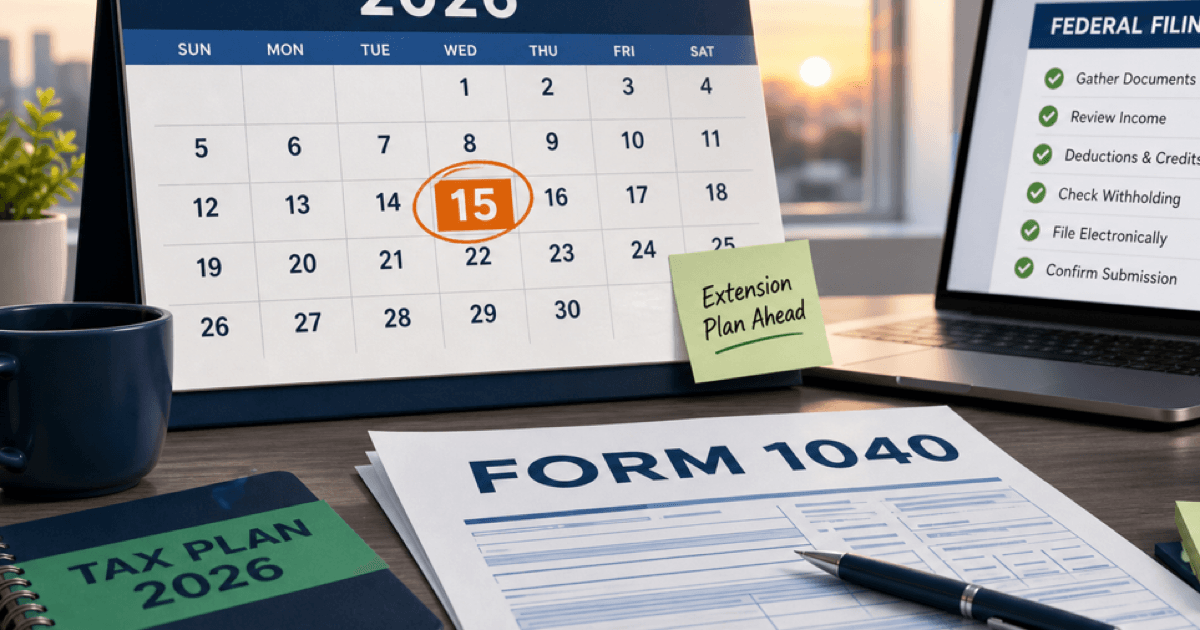
Form 1040 Deadline 2026
Use this for the April 15 Form 1040 filing and payment deadline, October 15 extension date, late-filing cleanup, and 1040-specific checklist.
Read guide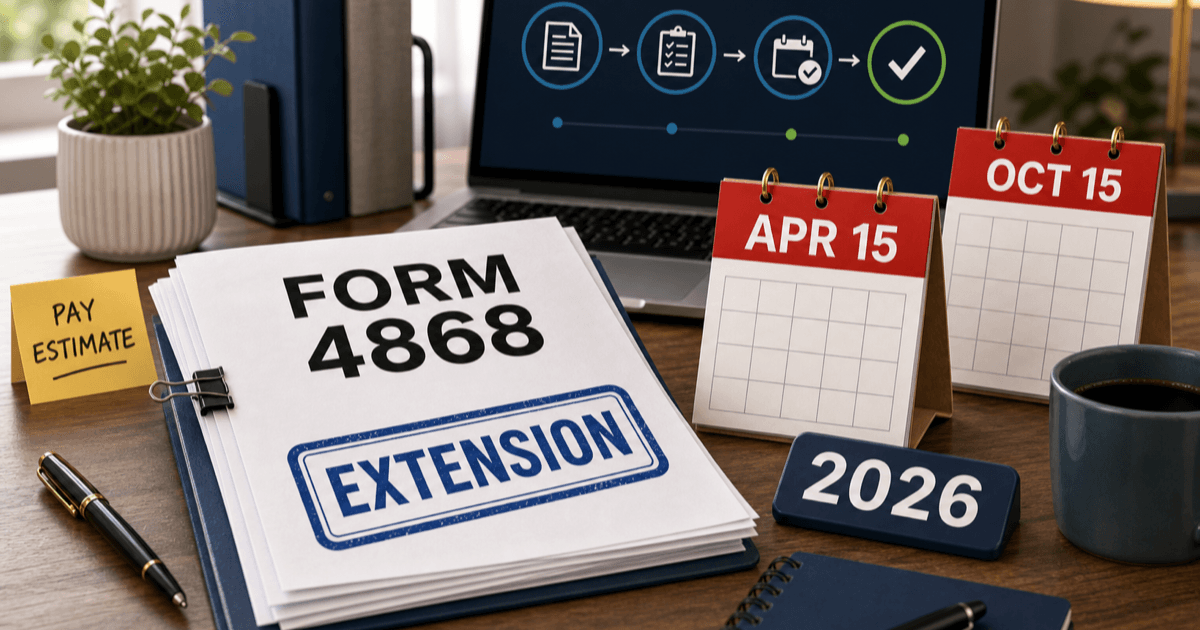
Form 4868 Deadline 2026
Use this for individual tax extension timing, the April 15 Form 4868 request deadline, October 15 extended filing date, payment estimates, online extension methods, and proof of filing.
Read guide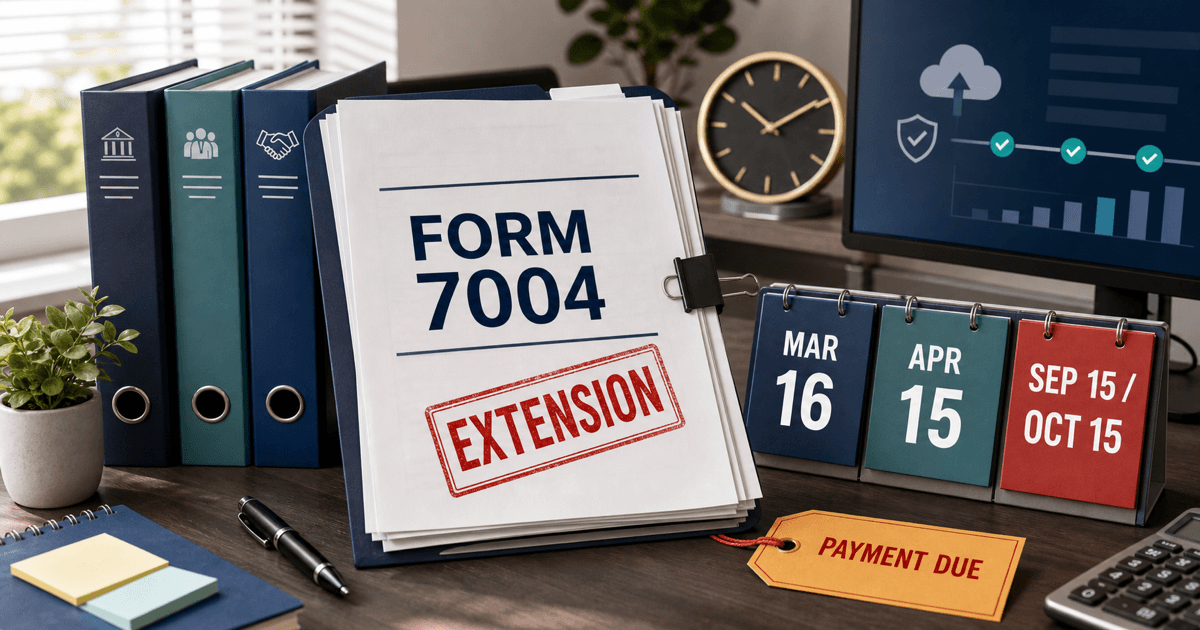
Form 7004 Extension Deadline 2026
Use this for business extension due dates, March 16 and April 15 Form 7004 deadlines, September 15 and October 15 extended filing dates, e-file rules, and no-extension-to-pay cleanup.
Read guide
Form 2553 Deadline 2026
Use this for S corporation election timing, the March 16 calendar-year deadline, 2 months and 15 days rule, shareholder consent, LLC S elections, late-election relief, and Form 1120-S follow-through.
Read guideSources & References
- 1.IRS - Instructions for Schedule C (Form 1040)(Accessed May 2026)
- 2.IRS - About Schedule C (Form 1040), Profit or Loss from Business(Accessed May 2026)
- 3.IRS - Self-employment tax, Social Security and Medicare taxes(Accessed May 2026)
- 4.IRS Publication 505 - Tax Withholding and Estimated Tax(Accessed May 2026)
- 5.IRS - 2026 tax inflation adjustments(Accessed May 2026)
- 6.SSA - Contribution and Benefit Base(Accessed May 2026)